Multi-frequency modified QRPKits.com Easy Transmitter

This weekend I returned to a shelved project from several months ago, a complete 40 M QRP station built around the Easy Transmitter & Easy Receiver kit line from Pacific Antenna (QRPKits.com).

Why the Basic Pacific Antenna Kits?

I first became aware of these excellent basic kits a few years ago when we chose the Easy Receiver kit as a group build project for a Wednesday Workshop at the Yale Center for Engineering Innovation and Design that we, W1YU, the Amateur Radio Club at Yale University were hosting.

The CEID is a nicely equipped maker space at Yale and their Wednesday Workshop series allows students, faculty and staff to learn something new by making. Popular Wednesday Workshops have included chocolate making, woodworking, 3D printing and W1YU would program a workshop to introduce the uninitiated into radio fundamentals.

We chose the QRPKits.com 40-meter direct conversion receiver for one of our workshops because the kit was simple to build and able to be completed in less than two hours, was inexpensive, and had a reputation of working the first time. That night 20 CEID members, most of whom never soldered before, paired off into 10 teams and after a presentation on RF and a brief soldering tutorial, they got down to work. I’m very pleased to say that out of 10 kits attempted, all 10 worked, with only a couple needing nothing more than a touch up of a cold solder joint or two.

My Current Project

My initial plan was to build the Easy Receiver and Transmitter and mount them into a single enclosure (a cigar box) to make an all-in-one station. In addition to the receiver and transmitter, I had also planned to incorporate the Easy Audio Bandpass Filter, the Easy TR switch, and the Easy Low Pass Filter to limit out-of-band harmonics on transmit.

I had assembled all of the basic kits several months ago and as I often do, became sidetracked and never finished the project. I came across my circuit boards recently in my basement workshop and decided to pick up from where I left off.

I had previously completed the receiver, audio filter, TR switch and the low pass filter. The transmitter was still in its original packing, so this became my first project for the new year.

My completed 40M transmitter with rotary crystal selector and fine tune control.
The completed project delivers 2.0 watts on all five frequencies.

A Couple of Modifications

I mentioned I came across the unfinished project in my basement recently. Over the past several months I have been working on organizing my workspace including inventorying and sorting the myriads of components I’ve managed to stockpile over the years. One of the things discovered in doing so was a variety packet of 40 and 80-meter HC-18U crystals for the QRP experimenter.

I decided I wanted to modify my transmitter build so instead of just being limited to the 7.040 crystal that came with the kit, I could easily select a different frequency by swapping crystals. The kit itself makes a provision as it includes a socket so the builder/operator could plug in a different crystal if they wanted to change frequencies.

My modification takes the concept a step further. Creating a small bus board on which I mounted several crystals and connecting one end to a rotary switch, I was able to make changing frequency as easy as twisting a dial. My transmitter allows the operator to quickly choose between 7.030, 7.040, 7.055, 7.110 or 7.118 MHz.

I made two other minor modifications. I incorporated the low-pass filter on board in the transmitter cabinet instead of as a stand-alone accessory, and I also added a yellow LED coupled with a 1K resistor to provide a power on pilot light on the front panel.

The green PCB is my multi-crystal mod. One side of the crystals are tied together and connected to the crystal socket on the main board while a ribbon cable connects the other sides to the rotary switch below.

I used a small Nub cigar box for my cabinet. I sanded off some printing on the bottom surface and applied a nice cherry stain to the box. Orienting the box so I used the thin bottom as the front of the radio, I had no problem with short potentiometer shafts. The sides of the box were quite a bit thicker, however, and I needed to countersink the holes drilled for the SO239 antenna connector and the coaxial DC power socket.

Another nice feature of the Nub box is that it has a slide off lid, which now becomes the back panel of the radio. It makes for easy opening for repairs or adjustments – or for show and tell at the local club.

How does it work?

The Easy Transmitter Kit promises 2 to 2.5 watts output on the 40-meter band, and I am very pleased to report that indeed, I measured a solid 2.0 watts on all five frequencies. The circuit includes a 5K potentiometer for fine tuning which allows a band spread of a few kHz. For the four lowest frequencies, I spotted my signal right on frequency with the fine tune knob set dead center. 7.118 was a bit off center, unlike the others, but still solidly within range of the fine tune control.

Needless to say, I was very impressed with the initial performance of the transmitter the first time I powered it up.

What’s Next?

I mentioned that I have already purchased and assembled the other kits in the QRPKits.com “Easy” line. I plan on mounting the 40 meter Easy Receiver and the Easy Bandpass Filter in two separate but matching Nub cigar boxes. I plan to mount a speaker in bandpass filter cabinet and include a headphone jack, and to not include any speaker on the receiver. I plan to either use the receiver with earphones (my preferred means for operating CW) or will use a 3.5mm jumper to feed the bandpass filter/speaker unit.

I am contemplating building a small linear amplifier to give myself a boost as needed. QRPKits.com and QRP-Labs.com each offer a simple RF amplifier at a low price that promise to boost 2 watts into the 7-10 watts out range.

I highly recommend the QRPKits.com Easy series of kits for the aspiring kit builder or the old timer, like me. As priced, they remain a great value, and the kits are easy to assemble and best of all – have always worked as advertised.

I plan to blog about the matching receiver and audio amp/bandpass filter as I manage to complete those projects. Have you built any of the QRPKits.com kits? What was your experience? Drop me a line and let me know how you fared at james@ab1dq.com.

Thanks for stopping by my blog & 73!
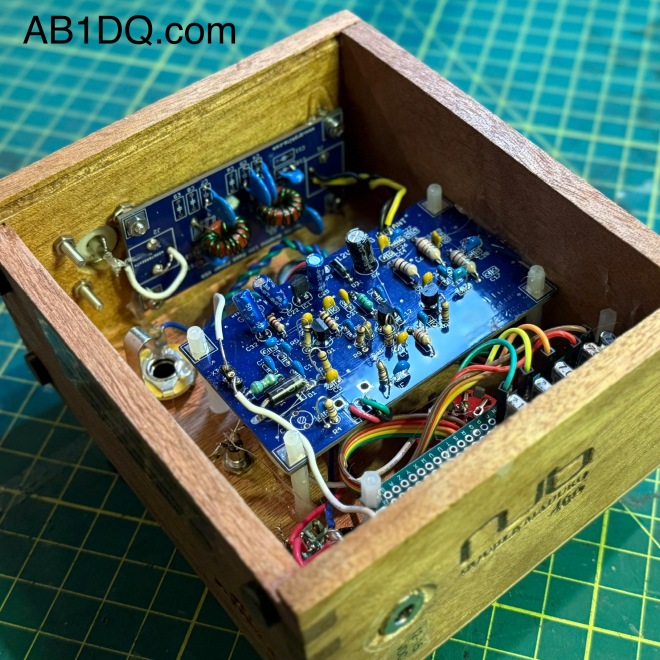
A peak inside – the auxiliary low pass filter was mounted to the side just above the S0239 connector, using a mounting screw from the S0239 and a modest amount of hot glue to hold the board in place.

©2025 JMSurprenant & ab1dq.com.
A Shortened EFHW for 80 – 10 Meters

MY FALL 2024 ANTENNA PROJECT

One of the best things about autumn is that after the pretty leaf-peeping season ends early in the month, there are several weeks of pleasant enough weather and the lack of leaves makes launching wires into tree branches so much easier. Thus, for many hams like myself, installing new antennas and repairing damaged existing ones is as much a fall tradition as football and pumpkin spice.

Last Spring I attempted to install an End Fed Half Wave Antenna cut for 40 – 10 meters running from the window of my 2nd floor shack across the yard and terminating in the upper branches of a dead tree on the edge of the backyard.

Building the simple antenna was a piece of cake. I built the HFKits 49:1 EFHW transformer kit (also available from the ARRL) and cut a 66 foot piece of wire (roughly half the wavelength of the 40-meter band.

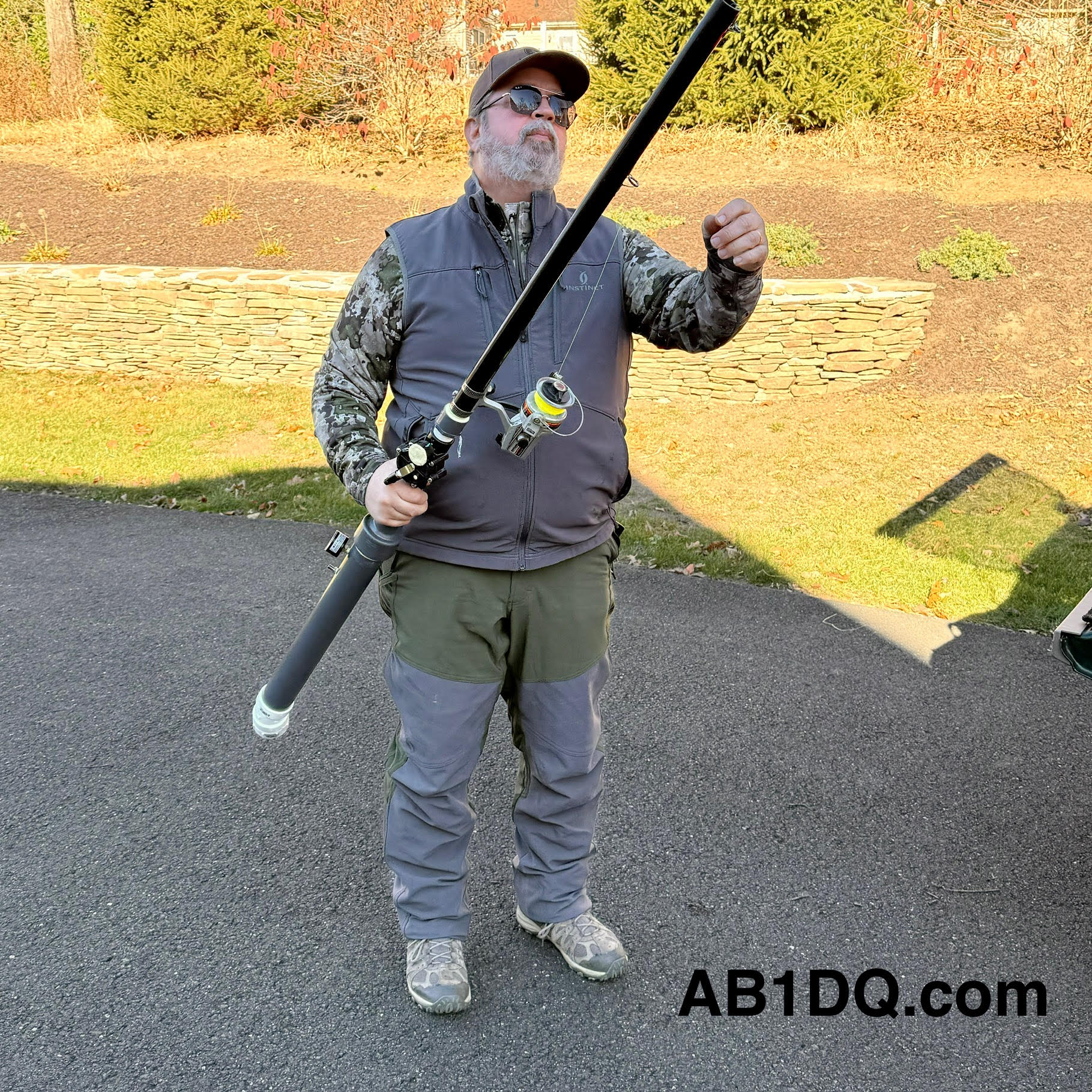
However, I failed spectacularly in attempting to get a line up into tree. I had been using a pistol crossbow with an attached spinning reel but despite all of my best attempts I could not place the line where I wanted it.

Losing my race against time as the spring foliage began coming in, I opted instead to orient the antenna with a downward slope to a terminal point about 15′ up to the base of a tree bordering the woods.

The antenna worked – I mean we all know EVERYTHING resonates – but it was a disappointment. The antenna also lacked a choke and was very noisy. I was also remiss that I couldn’t operate on 80 meters.

So, the summer of 2024 passed. It was a good summer in many ways, but I didn’t operate much from the home QTH. I enjoyed several POTA activations and set my sights on the fall antenna season to improve my EFHW.

When September rolled around I spent several weeks watching dozens of YouTube videos and reading articles on constructing a shortened end-fed half-wave antenna that would resonate on a portion of the 80M band and resolved to properly erect the improved antenna.

NOV. 2: CHOOSING A DESIGN & WINDING THE INDUCTOR

In researching EFHW physics and construction, I found VK4YE’s YouTube presentation on his 5-band EFHW which resonates over a narrow swatch (@ 100 kHz) of the 80mb by including a loading coil trap.  I found similar plans on several other websites but most called for a 110 uH trap.  VK4YE’s design called for a 70uH inductor. Appreciating his comprehensive and thorough description of the design, I decided to work directly from his plans and began gathering my materials.

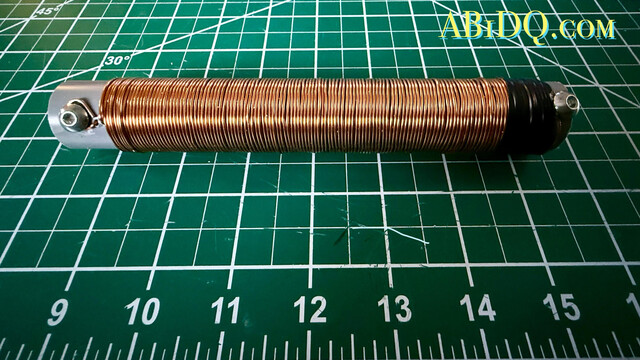
The directions call for 120 turns of 1mm magnet wire on a 25mm coil form.  I am that strange fellow who actually enjoys winding coils, don’t ask me why.  I’m pleased with my work – I measured the coil and found it to be right around 70 uH.  My only failure was that I cut the PVC ever so short before making the windings (see photo).  However, I believe it will work fine, and the coil will be shrink-wrapped before being hoisted up.

NOV. 4: TESTING THE TRANSFORMER & CUTTING WIRE

Today I completed construction of the antenna itself. Winding the coil was the most involved step and all that remained was to cut the wire lengths to spec and attach it to the inductor using a pair of dogbone insulators for strain relief.

I also tested my 49:1 transformer tonight to confirm that it is functional and that the impedance is correct.

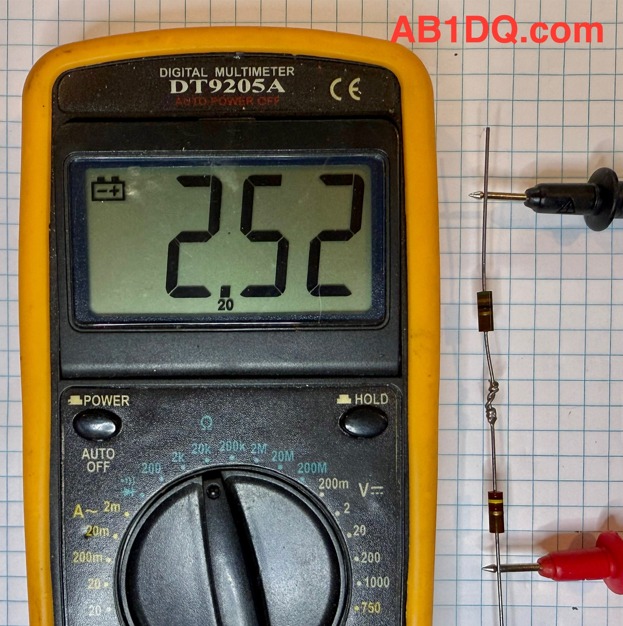
I placed a 2.5K resistor load across the output and ground and used my RigExpert antenna analyzer to read SWR which was consistent at about 1.5 or less across all bands from 80 to 10M.

NOV. 9: TUNING THE ANTENNA

Taking advantage of another great weather Saturday, I strung up the end-fed antenna in the backyard to tune it up today.

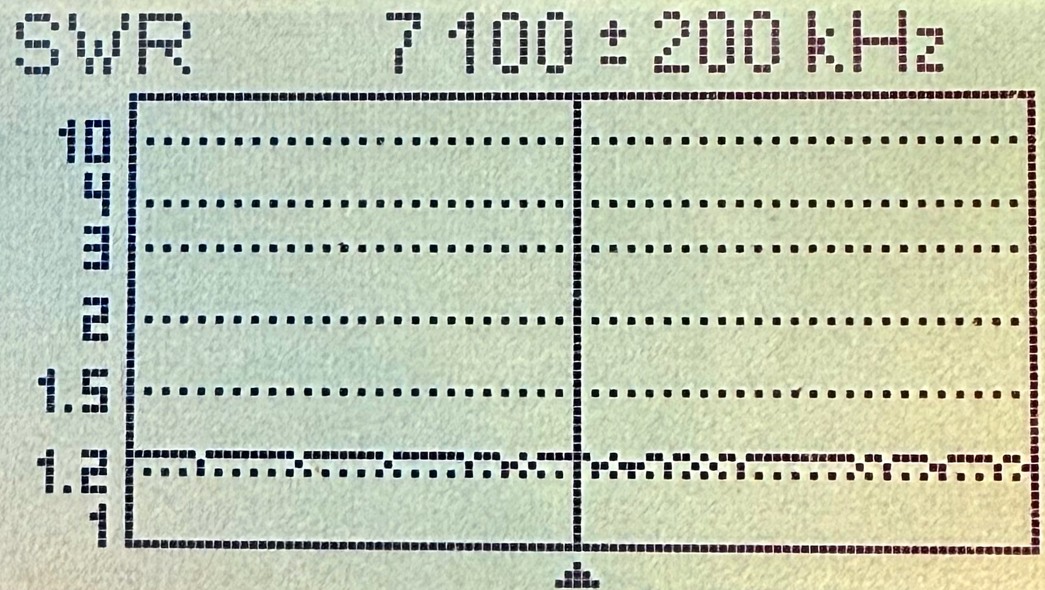
I was very pleased to see SWR readings of 1.5:1 or less on all bands except 80M, which was to be expected. All the documentation I researched about the 80-10m EFHW design stated that while the loading coil allows for resonance on 80 meters, only a narrow portion of the band will tune with a low SWR and it is essential to choose which portion of the band you want to resonate.

As I prefer operating CW on HF, I aimed for the lower portion of 80 and I found shortening the “C” segment of the antenna by 12″ brought the SWR down to less than 2:1 on the CW portion of the 80-meter band. See my SWR readings before and after trimming the antenna in the table below. The segment lengths are in inches.

NOV. 10: CONSTRUCTING A COMMON MODE CHOKE

On November 10, I built the final component of my new EFHW antenna, a Common Mode Choke, or CMC. It is highly recommended that a choke be used with an end-fed antenna to prevent the shield of the coax feedline from becoming part of the antenna system and radiating RF unintentionally.

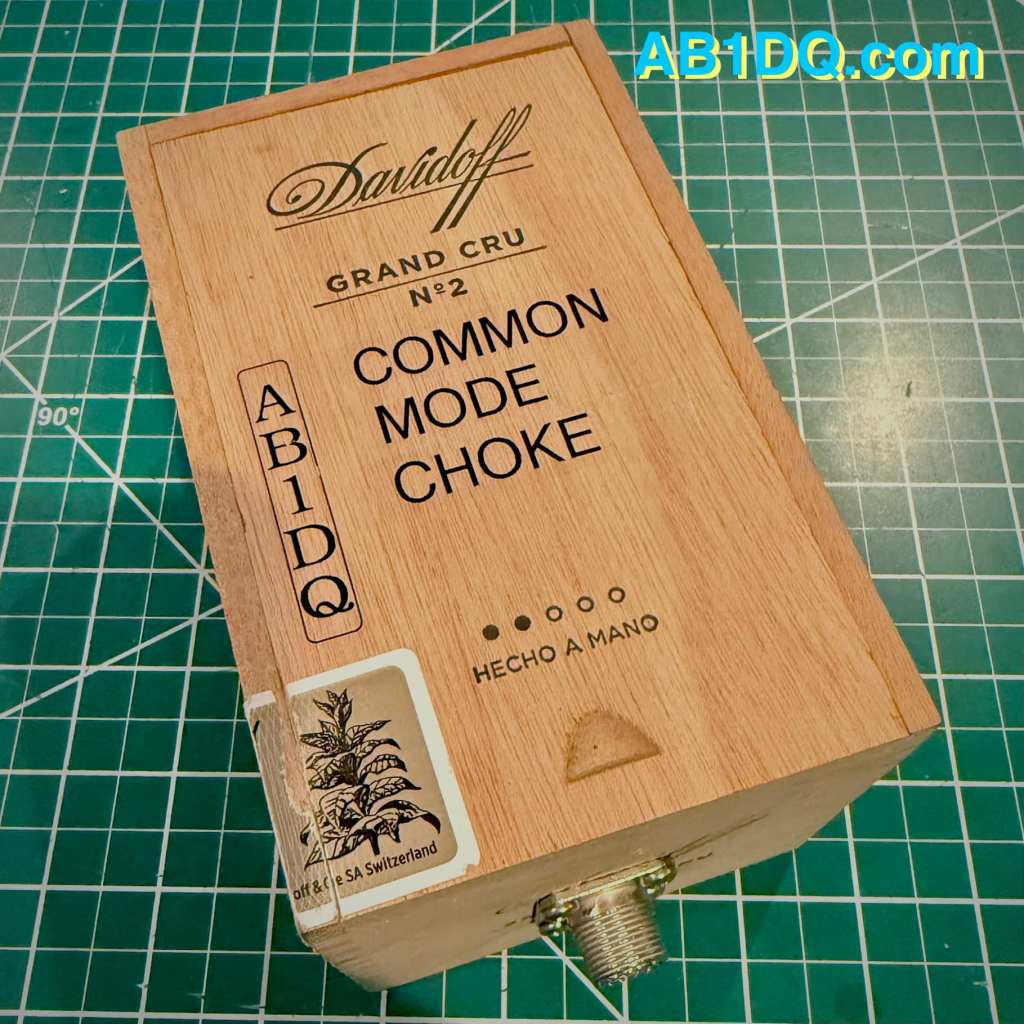
I built my choke by winding four turns of RG-8x coax through 10 ferrite toroids and mounting the works inside a small Davidoff cigar box with an SO239 connector on each end. The choke will be placed where the antenna feedline enters the house.


I found this video on common mode chokes by SmokinApe on YouTube extremely informative and I highly recommend it if you’re interested in learning more.

NOV. 16: OF SPUD GUNS & FELLOWSHIP

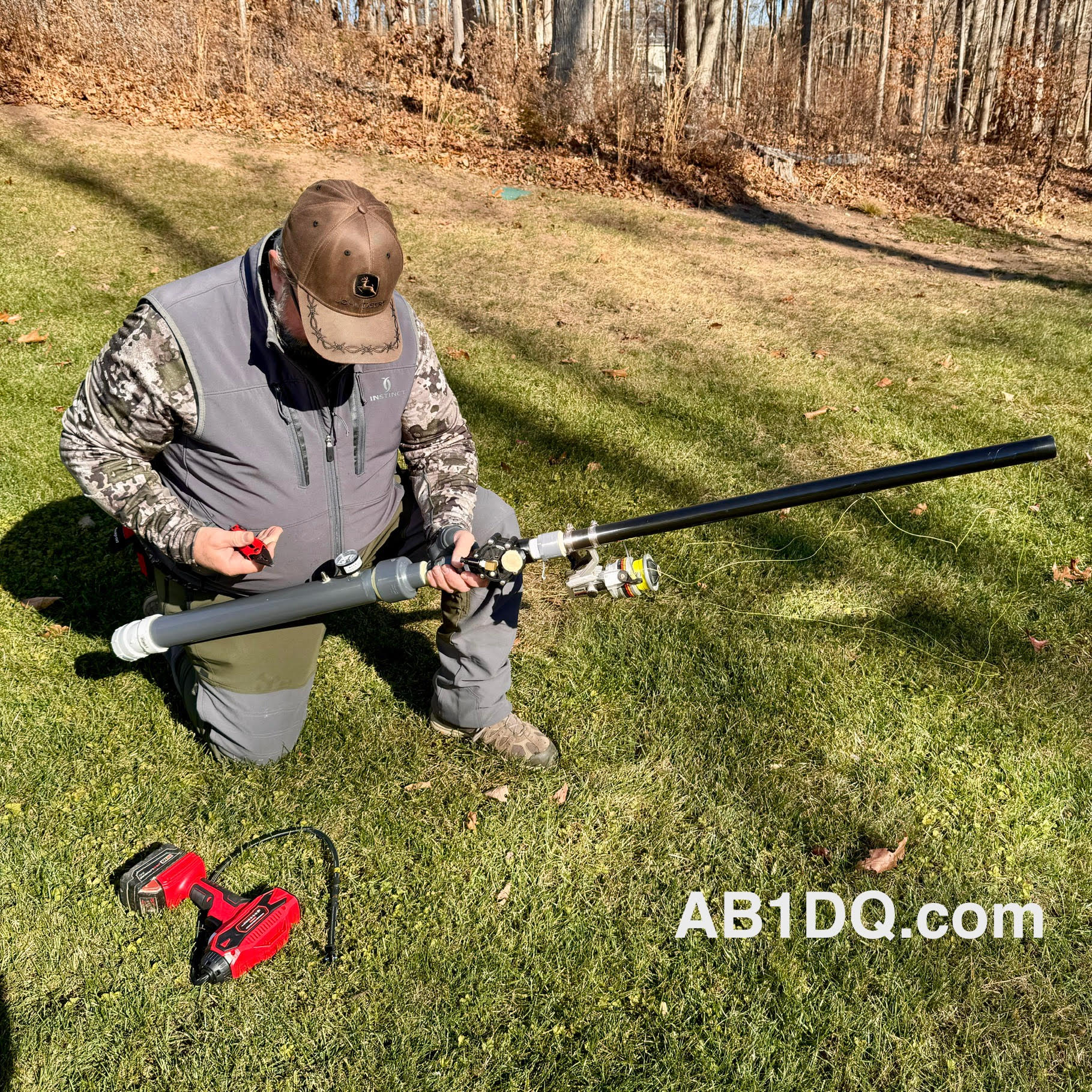
This past Saturday, November 16 brought more mild weather, and as our usual Saturday morning club open house was canceled that day due to a scheduling conflict at the OEM, it made it possible for me to get with Rob, K1RCT, our club’s station manage and an all-around good guy, who brought his mighty spud gun to my QTH to help me complete the installation of the antenna.

I always enjoy Rob’s company and his willingness to share his radio expertise. Years ago, our former club president, Bill W1KKF/SK made a couple of trips out here to Cheshire with his bow and arrow to help me string wires in the trees. I was always grateful to Bill for his help and his presence is missed by all who knew him. But now, Rob has brought antenna launching to a whole new level with his spud gun.

Prior to Rob’s arrival, I had tied off the feed point end of the antenna. A short run of coax extends from my transceiver to the Common Mode Choke placed on the windowsill of my 2nd floor shack.

A 3′ coax jumper connects the CMC to the 49:1 un-un on the other side of the window. I used a pool noodle as a pass-through. I drilled a small diameter hole matching the size of the jumper, and then using a razor blade, made a slit extending from each hole to allow me to feed the cable with the PL-259 through. The pool noodle makes for an inexpensive, easy and insulated feedline pass through.

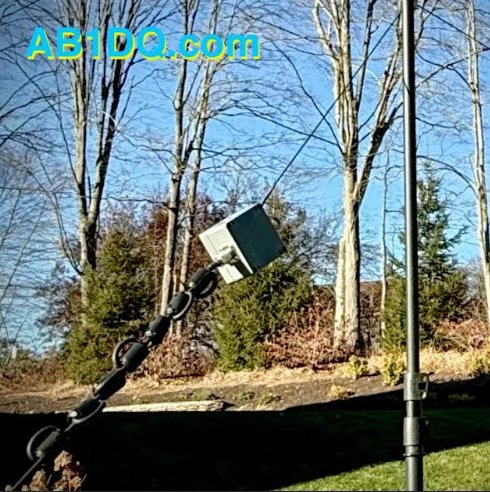
The antenna then begins from the top lug on the un-un, extending a few feet to a dogbone inserted for strain relief. A short length of rope is tied off to the eyelet on the top of the un-un and is passed through a galvanized steel eye hook attached adjacent to the top of the window pane.

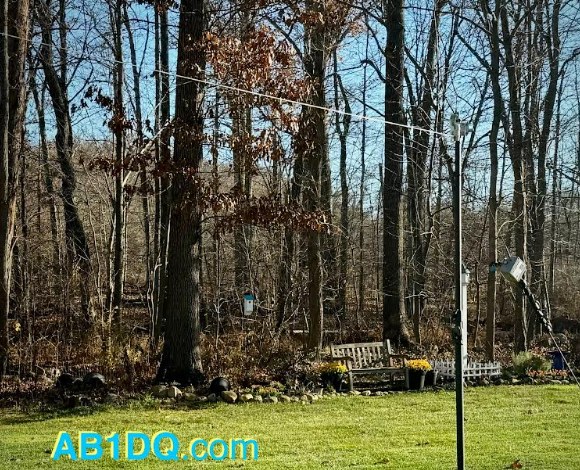
Here are a few final photos of the end of the antenna raising.

NOV. 17: ON THE AIR

My timing to complete the antenna project couldn’t have been better as this past weekend was the ARRL November Phone Sweeps – my favorite contest (as a non-contester). In years past, my goal for both the CW & Phone Sweeps was to beat my score from the prior year.

I am happy to report that I made 60 contest contacts, operating at my leisurely pace for a couple of hours. I searched and pounced and was able to work nearly every station I called on 40, 20, and 15 meters. The map seems to suggest the antenna performs as intended…

Did you have a fall antenna project? Have you used an end-fed half-wave antenna and what is your impression of the design? Leave a comment or drop me an email at james@ab1dq.com and let me know what you think.

Published November 19, 2024
©2024 JMSurprenant

POTA in the Fatherland

This August my wife and I were invited to spend a weekend with friends at their beach house on Lac La Belle in Waukesha County, WI. The lake was just a couple of hours north of Chicago, so the plan was to fly into O’Hare and rent a car for the drive up.

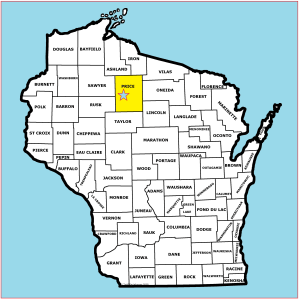
Location of Price County on the map of Wisconsin

My father was born and raised on a small family dairy farm in Price County in the Northwoods of Wisconsin and to this day I have many cousins living in the vicinity that I only get to see every few years, so we decided to extend the weekend trip into a week and drive north to see kin and then head west to Minneapolis for the flight home. The only thing that could make my Wisconsin vacation to see family and friends better of course, would be if I brought radios along.

Learning from the past

Two years ago, I made my first long distance trip with a portable HF station when I took my Xiegu G90 and an end fed half wave antenna on a flight to California to activate Yosemite National Park. For that trip, I placed the radio along with a LiFePO battery in a Pelican case along with the microphone, a compact Morse key and cables. I carried the Pelican case as my carry-on luggage which worked well aside from the fact it was a bit bulky and left no room for other things I like to have with me on a flight such as my iPad, a book and a camera.

For this year’s trip, I decided to pack the battery and the G90 into a backpack for the flight so I would have room for those other items during the flight. I didn’t want to carry the radio, or the battery unprotected in my backpack and I found a good solution.

Shopping on Amazon, I discovered that bible zipper cases came in a variety of different sizes and an 11″ x 8″ size case is a perfect size to hold the G90 and microphone. Here is a link to the case I purchased for my G90. For the battery, I purchased a small zippered cosmetic case that was also a perfect fit. The G90 and battery in their zippered cases fit nicely into my backpack with plenty of room for other carry-on items.

The EFHW antenna and the necessary 9:1 unun I brought to California also fit nicely in the Pelican case. However, I found deploying the wire antenna in the field to be less than ideal, needing not only a tree branch overhead to suspend one end of the antenna wire but also a means of launching the wire into the branches. I had brought along an arborist throw line with weight which I packed into my checked luggage. Yosemite had no shortage of trees, but at the time I was suffering from bursitis in my right shoulder, and I was only able to get the antenna up about 15 feet. Given the fact I was operating from a canyon rim, it all worked out well and I had a successful activation.

For this year’s Wisconsin trip, I gave the EFHW a pass and instead packed my JPC12 portable vertical trap antenna and 50′ of RG8 coax into my checked bag. The JPC12 is a Chinese made clone of the BuddiStick but with a couple of features I prefer. Instead of needing to be clamped to a railing or mounted to a separate tripod, the JPC12 has a ground spike that is driven directly into the ground making set up possible anywhere the ground is penetrable.

The JPC12 also comes with a simple but effective ground plane system of wires which is easier to deploy, and I assume provides a better counterpoise to the antenna than the single wire that comes with the Buddistick. Both the Buddistick and the JPC12 breakdown and stow nicely into a nearly identical zippered bag.

The JPC12 portable vertical antenna – inexpensive, compact, easy to deploy and very effective.

Into the Fatherland

Our flight to Chicago was uneventful. As expected, the radio and battery in my backpack resulted in a hand inspection of the bag by TSA. The agent swabbed the battery and had no issues with the G90 and the extra time at security was minimal. Whenever I fly with radio gear in my carry-on bag, I do pack an official copy of my amateur radio license and some POTA brochures, in case I needed to explain the purpose of my gear. To date, I’ve not needed to rely on these props.

Ham Radio + Hamm’s Beer, an obvious pairing

Arriving at the lake house, we were greeted by our friends and had a marvelous three days on the water swimming and boating and catching up. Our host and his adult daughter were not aware of ham radio and were intrigued by my portable station and plans to activate parks and asked if I could demonstrate the radio for them at the beach house. This gave me an opportunity to perform a test setup and operation of my gear before deploying to a park, which I was eager to do as I had not had the chance to try out the radio after updating the firmware to ver. 1.8 prior to leaving on the trip.

I was surprised and pleased with the G90s’ quality of reception on 20 and 40 meters and made several contacts on both bands using both SSB and CW prior to heading to a park.

Park 1: US-9846 Rome Pond State Wildlife Area

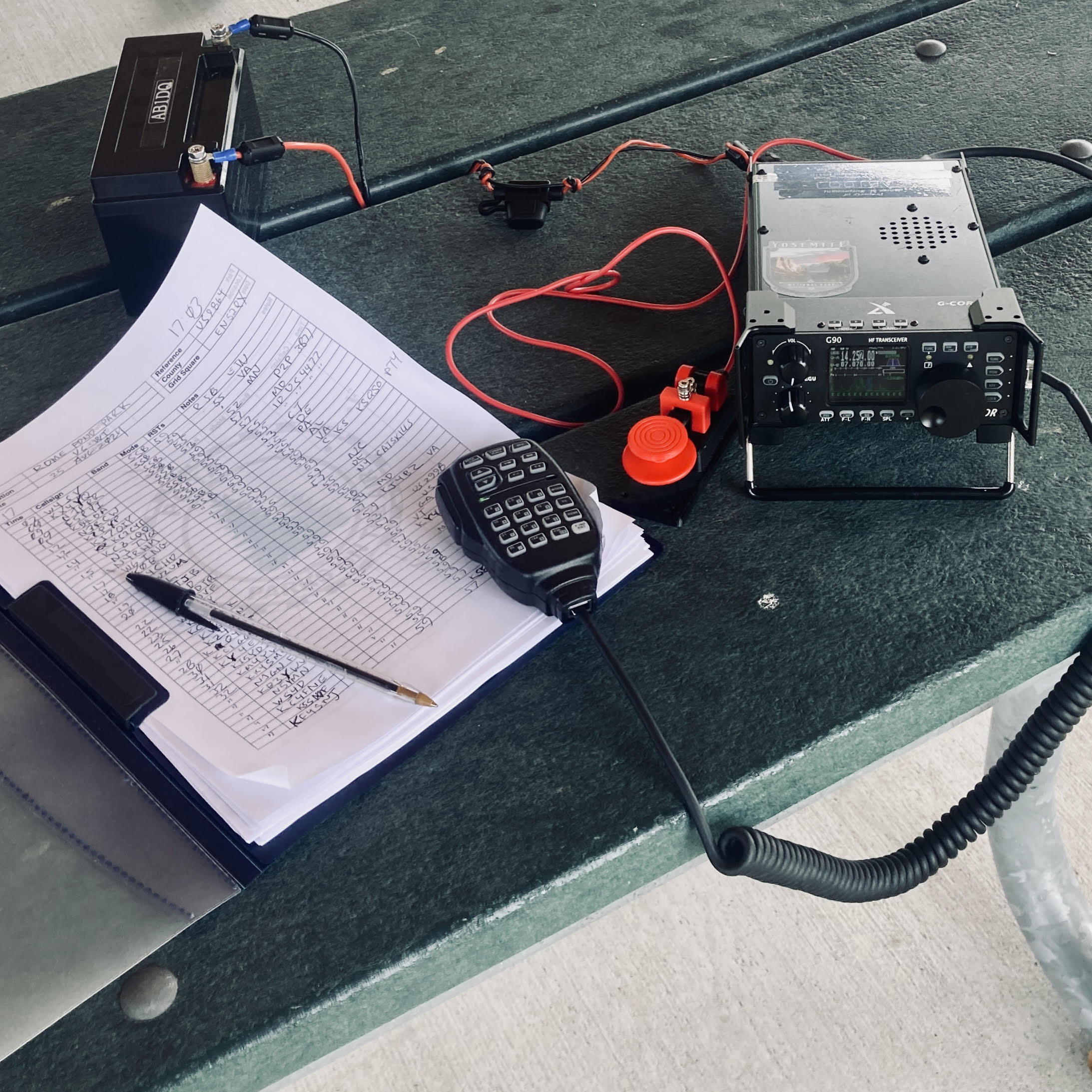
On Sunday August 25, I loaded up the rental car and drove about 20 minutes from Lake La Belle to the Rome Pond State Wildlife Area. It was an ideal location for a POTA activation. Next to the parking area was a covered picnic area with about a dozen tables and a nice adjoining field with barbecue grills which provided a great location to deploy the JPC12 antenna.

I truly love the G90. Not only is it compact with a great SDR front end with solid filtering, the built in auto-tuner is quick and precise and 20 watts output is more than sufficient to ‘work the world’ with good conditions.

Set up took about 10 minutes from start to finish and I was quickly on the air. I made 39 QSOs on 14.252 MHz in about a half hours’ time working stations all across the US plus one contact with a station in France.

The only downside of my activation of US-9846 occurred when I was taking down the JPC12. Being completely careless, I managed to bend a crease in one of the segments of the telescoping whip, nearly breaking it in half. Using a piece of aluminum foil, I snugly wrapped above and below the bend and then wrapped the section tightly with electrical tape. I left the broken segments extended for the rest of the trip and ordered replacement whips from AliExpress that night.

Park 2: US-4330 Spring Creek Wildlife Management Area

After a glorious weekend on the lake, we spent most of Monday making the four plus hour trek into the Northwoods to Price County where my dad was born and raised and where most of my cousins still reside.

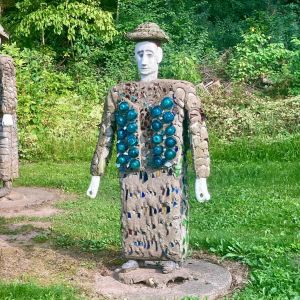
A Fred Smith original sculpture at the
Wisconsin Concrete Park

The town of Phillips, Wisconsin, the seat of Price County has a population of about 1,500 and is a great destination for fishing and hunting. Within Phillips is the Wisconsin Concrete Park, a unique roadside attraction featuring over 200 Americana folk art sculptures built with concrete and decorated with glass bottles and other found objects. Fred Smith, who ran the Rock Garden Tavern on the property, began building the sculptures in 1948 after retiring from his career as a lumberjack. Smith, who lacked any formal artistic education, initially built two-dimensional bas relief plaques and eventually transitioned to constructing his larger sculpture.

On Tuesday, August 27, I headed out for my second POTA activation of the trip and decided on US-4330 Spring Creek Wildlife Mangement Area based on its proximity to the Timber Inn in Phillips where we were staying. The park was about a dozen miles southwest in the township of Catawba.

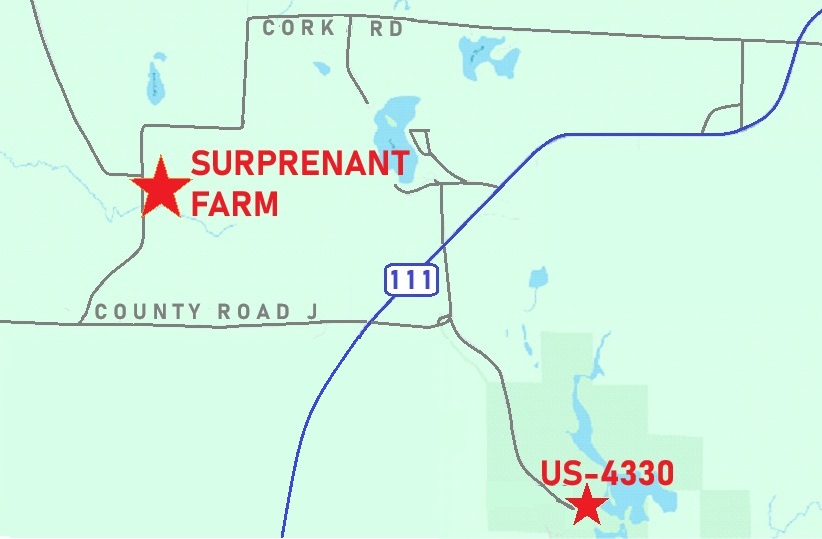
POTA US-4330 Spring Creek Wildlife Management area is very close to the family farm where my dad grew up.

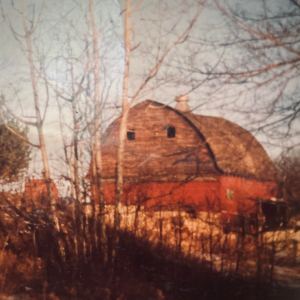
As I neared the turn off for the park, I spotted a sign for Cork Road and suddenly realized that I was in very close proximity to the location of the family dairy farm where my dad was born and raised. My grandfather’s farm was on Cork Road, a long dirt road cutting through the woods and in past visits, I had the opportunity to see the family farmhouse and barn, which my dad recalled helping build when he was a young boy, and hunt on the land with my dad, uncles and cousins. The farm was sold out of our family decades ago and sadly neither the barn nor the farmhouse still stands.

The barn on my grandfather’s dairy farm on Cork Road. I took this photo in the late 1980s.

My activation at Spring Creek was successful, although a bit more challenging than the previous activation at Rome Pond. This time the weather was not-so-pleasant as T-storms were passing through the area. Also, there were no picnic areas at Spring Creek so given the inclement weather and the swarms of mosquitos, I deployed the JPC12 antenna behind the rental car in a parking area within the park and operated from the driver’s seat. Another successful activation, I made 30 contacts on 14.252 MHz working stations all across the U.S.

My trip to Wisconsin this year was a great time with family and friends, and it provided me with a great opportunity to activate a pair of Wisconsin parks in the POTA program. If you were fortunate enough to work me, keep your eye on your mailbox. Whenever I travel to activate a park I like to send out a commemorative QSL card as a way to memorialize the trip without seeking or expecting reciprocation.

73 from the land of the cheese curd and the brat’ !

Passing through the Merrimack Valley, April 30, 2023

As is my tradition, I spent the last weekend of April in southern New Hampshire, visiting my sister and attending the spring hamfest known as NEARfest. Every April and October I bunk work to attend the flea market on its first day, the Friday of the weekend, and then return on Saturday to make it a two day affair.

I had a glorious time on Friday and the weather was perfect and this year and I was fortunate to sell just about all of the old gear and abandoned projects that were taking up space in my basement.

So instead of returning to the flea market on Saturday where I’d no doubt run the risk of succumbing to the temptation of spending my Friday windfall on new radios that would most likely sit in in the basement untouched for months on end, I decided to take a leisurely drive home on Saturday morning and make a few stops along the way in and around my hometown of Lawrence, Massachusetts.

Here are some photos from my visit to the Merrimack Valley. Can you go home again? I think so.

Smokestacks, Lawrence, Massachusetts
La Cibaena Bakery, Lawrence, Massachusetts

Optimizing my Numark PT-01 portable record player

A couple years ago I purchased a Numark PT-01 portable record player after reading and watching some reviews online. Fully aware that portable record players don’t come close to delivering the high fidelity of a good home turntable set up, I wanted something I could use to play records while sitting out on the porch in the evening.

There aren’t many options in portable record players, and the vast majority of what is available are all based on the same cheap plastic architecture featuring a Chuo Denshi ceramic cartridge. The Crosley Cruiser in all its varieties is ubiquitous as are the Victrola clones. Neither are renowned for their high fidelity and are panned by most ‘serious’ audiophiles.

While the Numark PT-01 features the same cheap plastic mechanism belt driven by a DC motor as the Crosleys and Victrolas, but had some attractive features not found in those players. The Numark has an adjustable tone control and a pitch control, two were nice pluses, but even better, the PT-01 can be powered by six D-cells, unlike the Crosley and Victrola portables that must be powered from a wall wart transformer.

The PT-01 only has a monaural full range 3″ speaker, but to my ear, that’s a better choice than the smaller stereo speakers mounted too close together in the Crosley and Victrola. LIke the Crosley and Victrola, the Numark does have RCA jacks for full stereo out, and two headphone jacks – both 1/8″ and 1/4″ – which surprisingly produces very decent sound when a good set of stereo headphones are use.

Playing records on the PT-01 on the front porch has been absolutely delightful over the past two years, and I was so impressed with this $100 portable player that I had gifted one to my 8 year old godson and 12 year old granddaughter. Both children have enjoyed the record player and both continue to grow their record collections.

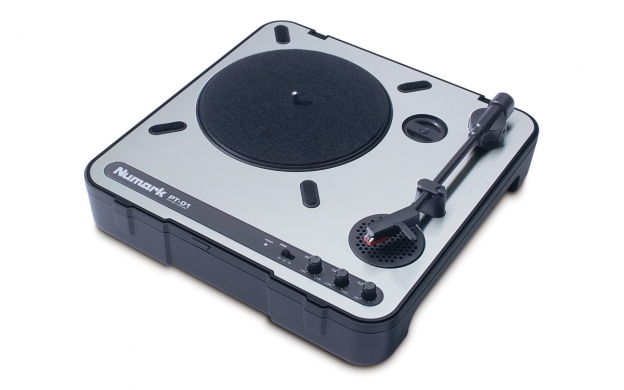
The Numark PT-01 portable record player

Modifying the Numark PT-01

The PT-01 has something of a cult following and is also available in a ‘scratch’ version. Several aftermarket firms have marketed modifications for the PT-01 and as someone who enjoys mucking around with electronic devices, I found myself unable to resist the allure of making a few mods to my record player.

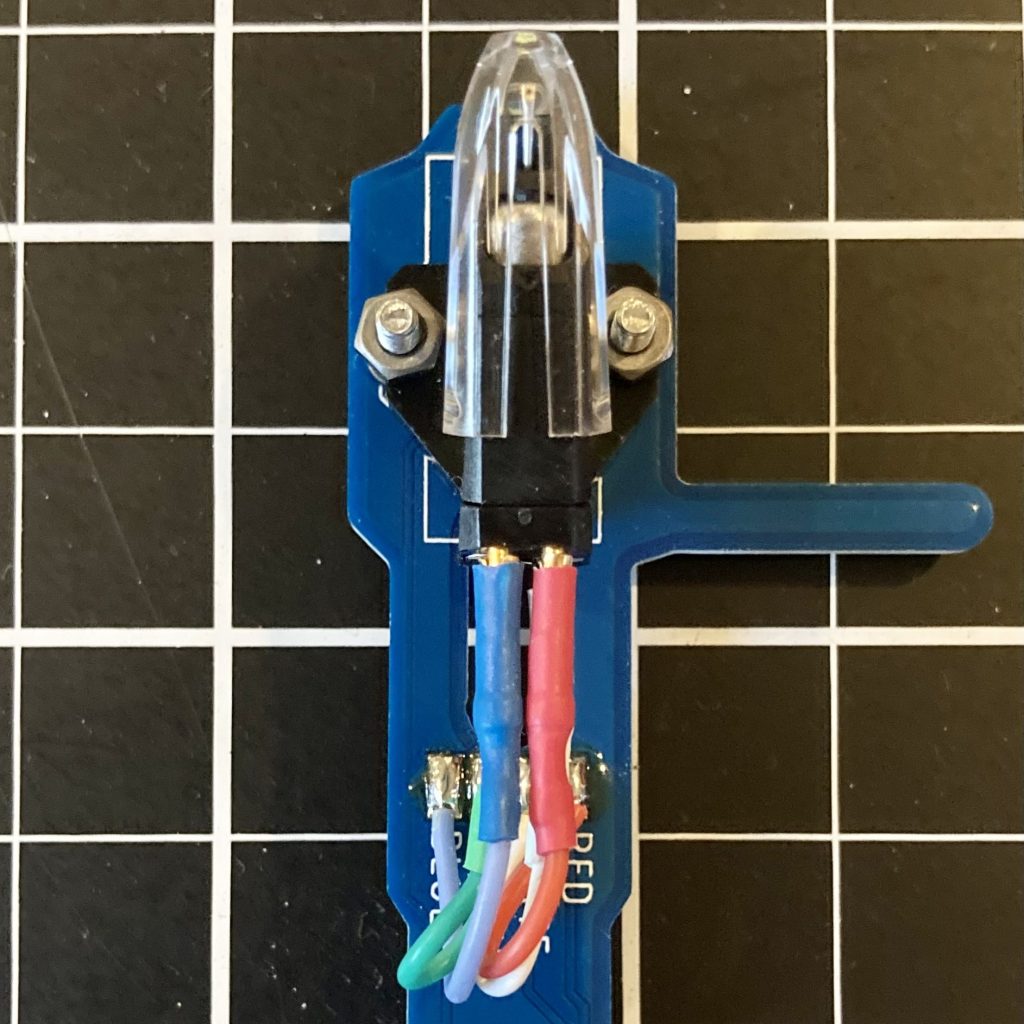
This weekend I installed a better speaker, the Jesse Dean Designs Puck-It platter support and PCB tone arm & pre-amplifier kit to allow me to use a magnetic cartridge.

The speaker was an easy upgrade, as the speaker has the same dimensions as the stock speaker. The Puck–it platter support, which adds rigidity to the plastic platter was also a simple upgrade, as it just firmly presses into the center of the bottom of the platter.

The Jesse Dean Designs Puck-It Platter support (L), and the Celestion replacement speaker (R)

The installation of the new tone arm was a bit more involved, but again, wasn’t difficult, and my installation took about a half hour’s time on the workbench guided by the excellent Jesse Dean YouTube step-by-step directions found here.

The tone arm kit comes with everything needed for the mod including, in addition to the tonearm itself, a compact pre-amp, two breakout boards, connection wires with connectors and hardware.

What’s in the JDD tone arm kit (Photo courtesy of https://jessedeancustoms.com/)

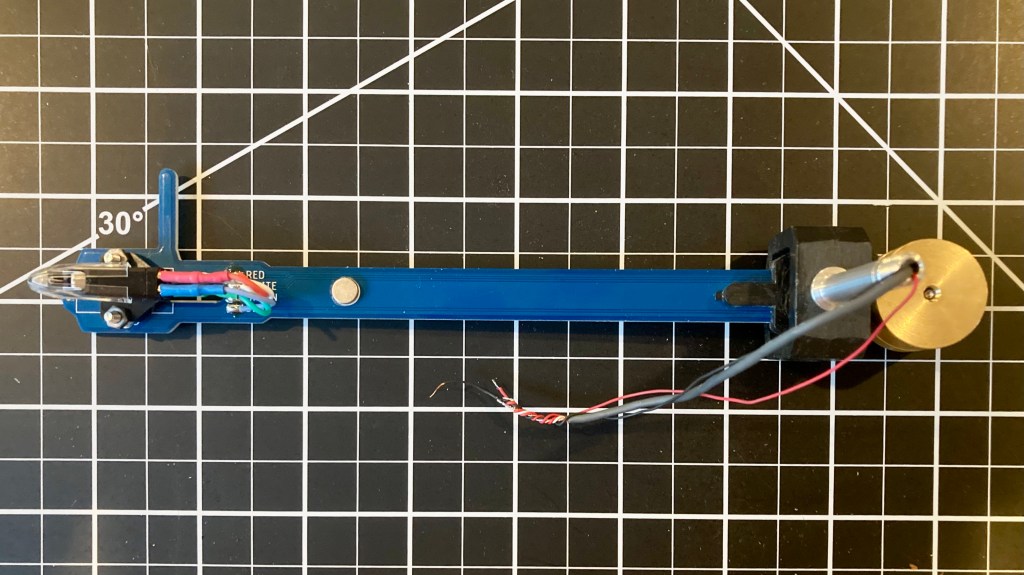
The tonearm is a bit unconventional and a thing of beauty. It’s actually a printed circuit board, which allows it to be thin and connections from the cartridge to the back of the arm are built-in as traces on the board. It also features a nifty built in white LCD under the head shell area.

The bottom of the flat tone-arm

The Ortofon OM 5e cartridge mounted to the PCB tone arm.

L: Bottom view of cartridge mounted to the tonearm.
R: The Jesse Dean kit comes with a nifty magnet insert that goes into the original tone-arm holder. A very cool design, indeed!

The accessory boards needed for the pre-amp are very well engineered to fit into the existing PT-01 architecture without the need to drill additional holes. Each of the three boards mounts neatly using existing screws.

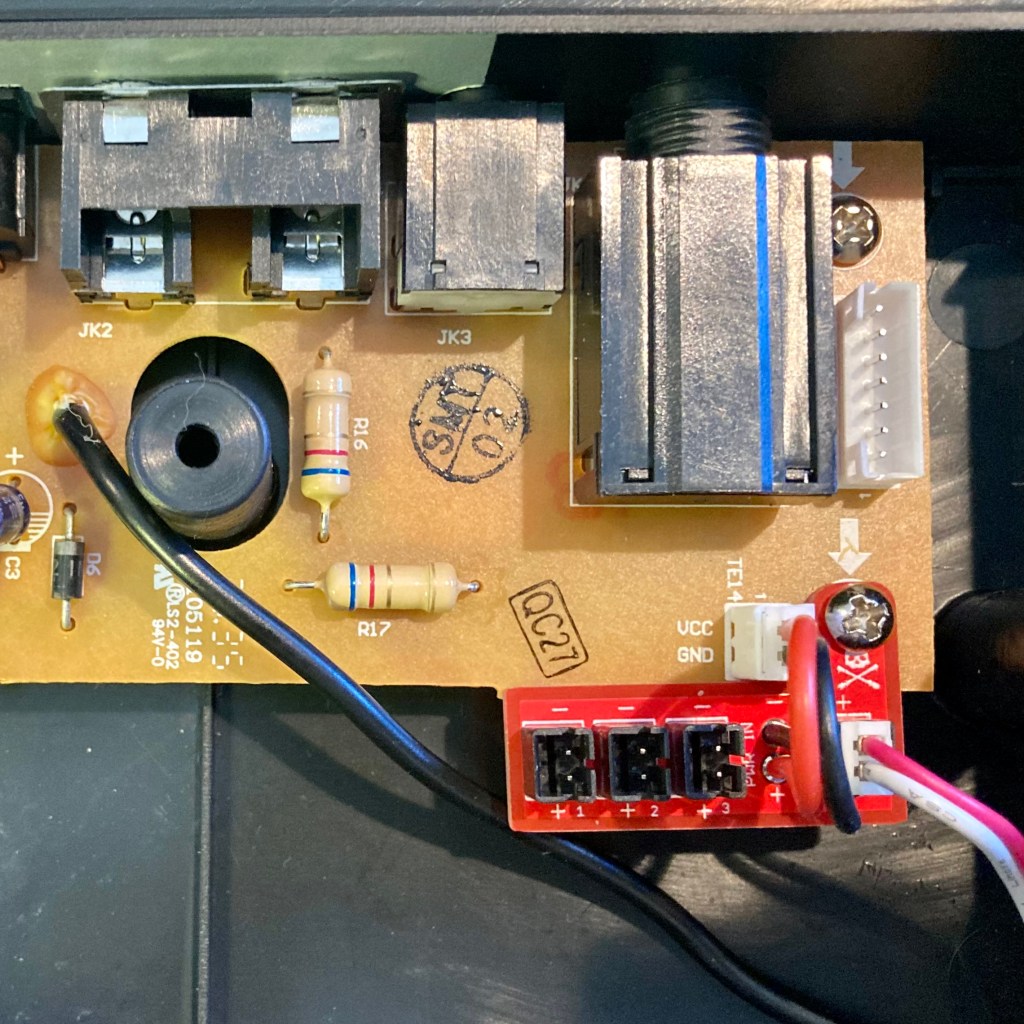
I did, however encounter a very minor fitment issue when installing the pre-amp break out board. I could not mount it square to the existing PCB as two electrolytic capacitors interfered with the end of the break out board. It was no matter to mount the board slightly counterclockwise on the mounting screw axis. This was the only glitch I ran into when installing the tonearm kit. It was an easy and relaxing project to work on on an Easter Sunday afternoon.

L: The power break-out board installed in the bottom half of the PT-01 cabinet.
C: The Pre-amp board and pre-amp break-out board installed.

(Note there was insufficient room to mount the break-out square to the main
PCB due to the placement of two electrolytic caps).
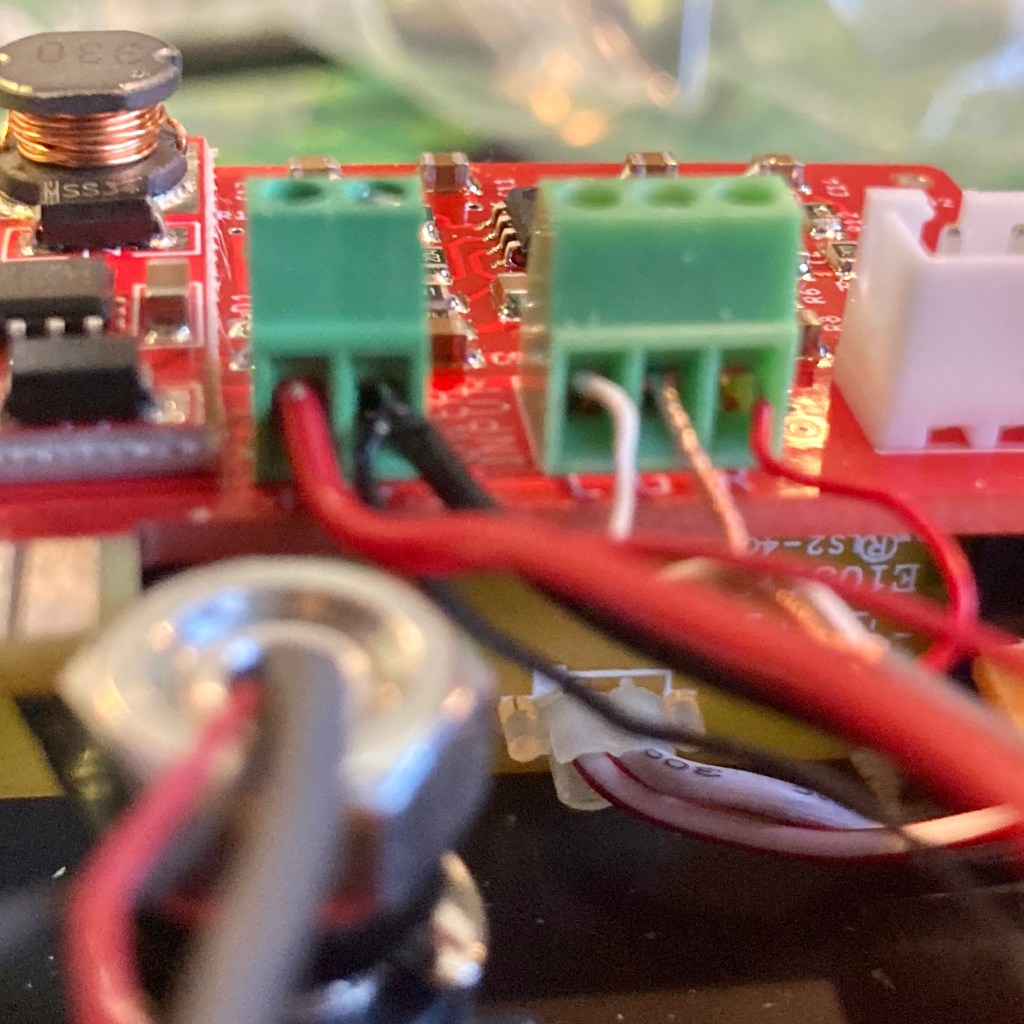
R: The power and tone arm connections on the pre-amp board.

Results

Powering up the PT-01 for a test run before closing up the cabinet, I found that everything worked properly. I queued an album and made sure to listen on a set of headphones to make sure I was getting stereo L/R audio, something that wouldn’t be obvious listening through the monaural speaker if one of the channels wasn’t properly connected.

It works – huzzah!

Overall, I’m very pleased with the results. As expected there is a much improved higher fidelity sound due to the replacement of the ceramic cartridge with the higher end Ortfoon moving magnet cartridge. It’s definitely not audiophile quality, which is to be expected, but for the cost of these few accessory parts, my beloved portable record player has been appreciably improved. And, here comes summer!

Browse the Jesse Dean Design website here.

Yosemite National Park

POTA K-0071 – 13 FEB 2023

This past week I had the opportunity to glom onto a business trip my wife was taking to San Francisco on the cheap. As her travel and lodging was being covered, I was able to enjoy a mini-vacation for the cost of an airplane seat – not too shabby!

As we have visited San Francisco a couple of times in past years, and despite the fact we never tire of the “City by the Bay,” we thought it would be fun to do a side trip to Yosemite National Park, which I had not previously experienced. It is a four hour drive from San Francisco – but a scenic one.

I realized this was a pretty good opportunity to practice my POTA activation skills and to test some of my new gear including the End Fed Half Wave antennas I recently constructed. I’ve never flown with more ham gear than an HT or two in the past, so going through TSA with a complete HF go-bag was going to be a new experience as well, one from which I learned a few things.

Packing for the trip

I decided that my Xiegu G90 DSP transceiver would be a good choice to fly with as it is compact and although it only puts out 20 watts, it should perform well at the higher altitudes found around the edge of Yosemite, even on SSB.

I packed the G90 in its original box, which not only provided protection for the rig with the Styrofoam inserts, but it also provided enough space to tuck in a mini un-un, some power cables, a copy of the manual, my mini log book, and a pencil.

I printed an official copy of my FCC license and included that as well in the G90 box and, using a Brother label maker, I labeled the outside of the box, “Property of Amateur Radio Station AB1DQ, Cheshire CT.” While based on the accounts of flying with ham gear that I read that others shared online, I didn’t anticipate much difficulty going through TSA with my shack-in-a-bag, but I felt a professional looking packing job might be useful if any TSA agent asked hard questions.

Originally I planned to power the rig from the rental car battery, I made two sets of power cables that terminated in PowerPole connectors that interfaced with the G90 power cord. One set had battery post clamps to attach directly to the car battery, and the other had a 12 volt cigar lighter plug. Based on the 8 amp rated current draw of the G90 at maximum 20 watt output, I felt I didn’t run much risk of blowing the 15 amp cigar lighter fuse, but I did pack extra fuses just in case.

Then I decided for not much more space (but a bit more weight) in my go bag, I should bring a LiFEPO4 battery and charger which would allow me more flexibility to operate, should I want to, after we returned the rental car for the San Francisco portion of our trip.

I found a deep cycle 12Ah 12.8 battery on Amazon that met my specs for less than $60. I made a short jumper cable terminating in PowerPole connectors which I pre-attached to the battery. Like the rig, I kept the battery in its original packaging in my go-bag, again labeling the box with my callsign and contact information. The battery did catch the attention of the TSA agent, but after a careful visual inspection, she returned it to its box and handed it back to me.

My antenna plan was to use an End Fed Half Wave. A couple of months back I built a pair of 49:1 un-uns from HFKits.com, and had yet to try them out on the air. This seemed like a great opportunity, so I packed both along with 60′ length of basic hookup wire to use as the radiating element.

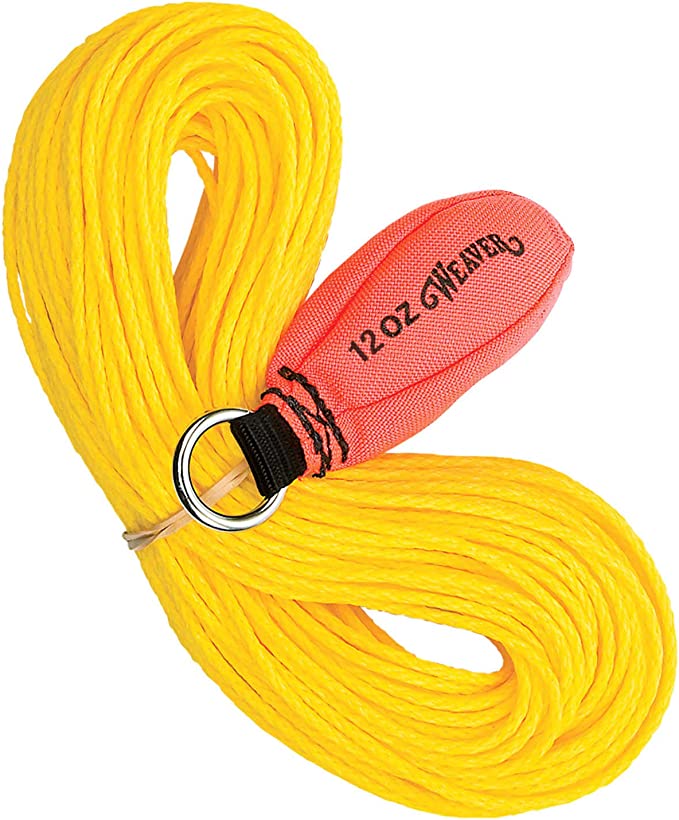
I have been one who has always struggled with launching lines into trees for my wire antennas, so after some YouTube research, I thought I’d try something new. – an arborist throw-line attached to a 12 oz weight. Given the altitude of the park’s rim from where I planned to operate, I didn’t need too much height for the antenna, The 20-30′ or so I could get the high end up in a sloping configuration should suffice, so the throw-line seemed like a promising option.

I found just the thing again on Amazon, and I also decided to add a collapsible throw line storage cube, which would allow me to keep the line untangled during transport and deployment. The cube was great because it folds flat but its 16″ square sides meant that it would not fit in my duffel bag go-kit, so the throw line and storage cube would have to be packed into my checked suitcase. The flatness of the collapsed cube made it easy to pack at the bottom of my checked full size suitcase along with my clothes for the trip.

I used a couple of gallon size Ziplock bags to pack the miscellaneous items I would need, including my Morse key, 60′ of antenna wire, additional pencils and a pencil sharpener, a couple of power cable extension cords, etc. All items, aside from the throw line and cube, fit nicely in a small duffel bag along with my laptop, a couple of books and a few other carry on items for the trip that would stow nicely in the overhead bin.

Aside from the visual inspection of my carry-on bag by TSA, with the careful attention given to the battery, I had no problems taking the go-kit through airport security and onto the plane. I wasn’t asked any specific or probing questions about the contents of my bag.

Operating Yosemite

We were staying at the Yosemite Valley Lodge while in the park, which we found to be great accommodations for our visit. However, being deep in the park valley, with rising mountains on all sides, it made sense to find a spot from which to operate that was higher up off the canyon floor. And, while I’m aware that a big part of the POTA program is to present ham radio in a positive light to the uninitiated, and as much as I love being that goodwill ambassador for our hobby, I tend to get nervous when I’m being watched, particularly when I’m not completely familiar with gear or a configuration I haven’t tried before. So I was also looking for an operating site that was a bit more remote with less foot traffic.

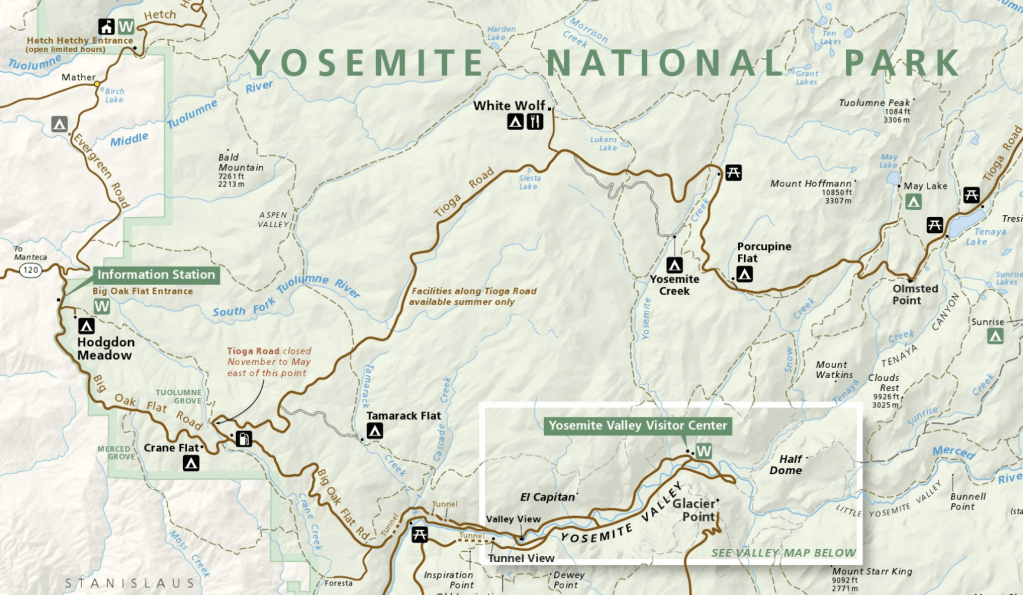
After studying a map of the park, I decided a good bet would be to drive west up Big Oak Flat Road towards Porcupine Flat which was north of us and had a picnic area. However, the Tioga Road is closed in the wintertime, so we ended up stopping near Toulumine Grove at the road closure.

There was a convenient parking area there at 37-706250 N, -119804167 W which provided both altitude and minimal foot traffic. The spot looked ideal for my planned activity so I parked the rented Ford Edge and began my set up.

This was the first time I tried a throw-rope and I found the deployment to be about as easy as it seemed in the YouTube videos I had watched. However, due to some chronic shoulder pain I’ve been experiencing in my right arm, I have been lacking my usual range of motion and wasn’t able to get the bean bag weight over my chosen branch, but needed to settle for the next one below, which I estimated to be about 20′ up.

I detached the throw weight and connected the the end of my 60′ antenna wire to the rope and hoisted it up to the branch and tied the throw rope to the trunk of the tree. I asked my wife to stretch out the sloping antenna wire to the point where it met the ground and I repositioned the car.

I attached the end of the antenna wire to the un-un and connected the un-un to the G90 via a 25′ length of RG58. The antenna was sturdy and up high enough that any passersby should not run into it, but I realized after the fact that I failed to make appropriate use of the strain relief on the un-un. (See right most photo below for how to do it right!)

While I should have taken the time before flying off on my trip to test and trim my wire element to obtain a minimal SWR, I didn’t have the opportunity to do so, but I was pleased that the G90’s auto tuner was able to obtain a 1.8:1 SWR.

Initially I powered the G90 via the cigar lighter plug I fashioned, but found the voltage reading on the G90 panel to be right around 11.0 V. Upon switching to the LiFePO4 battery, the G90 was reading around 13.0 V. so I continued to use the battery.

The immediate advantage to operating (very) remotely and on a battery, is how quiet, nay, silent, the HF bands are. A far cry from the noise floor that is typical at my home QTH fixed station.

I began calling CQ POTA on SSB on 14.324 and over the hour I had available to operate that day, I made 11 contacts. Fewer than I had hoped for, but enough to make my activation successful.

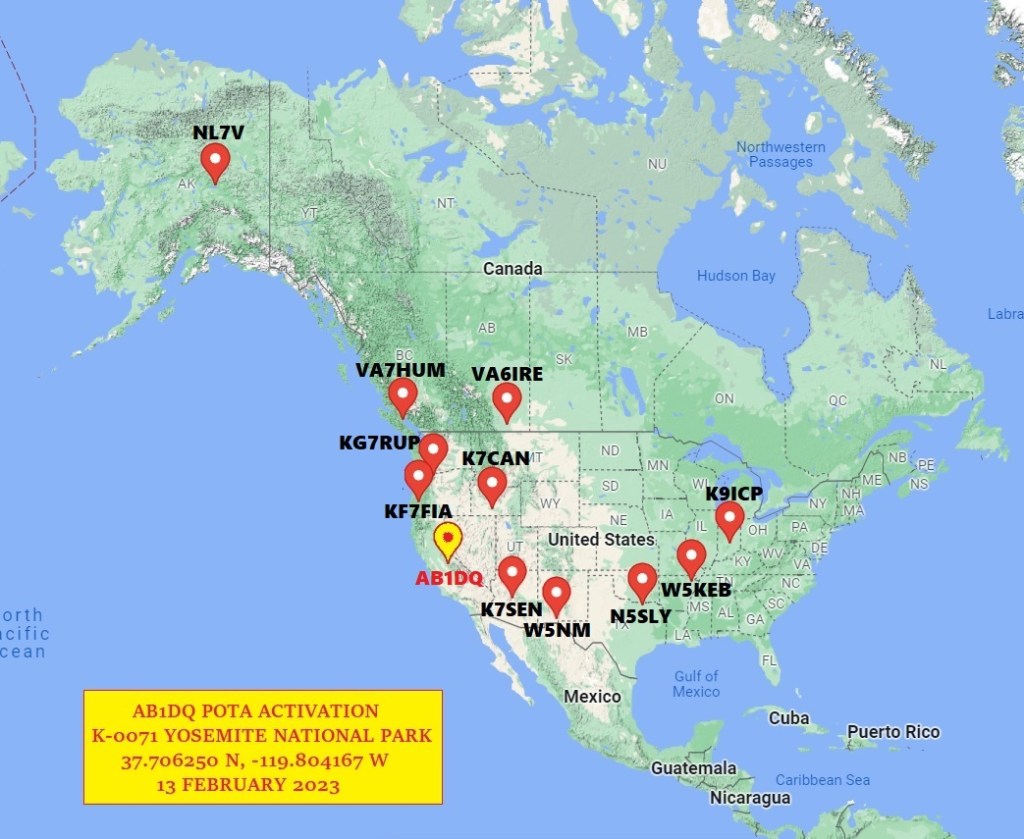
With my 20 watts and a wire, I worked as far north as NL7V in Fairbanks AK who rated my signal 53, as far east as K9ICP in Greenwood IN who reported my signal 59, and as far south as W5NM in Las Cruces NM who provided a 55 report. Included in my 11 contacts was a single Park-to-Park contact with K7CAN who was activating Minidoka Internment National Historic Site, Park K-0849 in Idaho. We swapped 59 reports.

Lessons Learned & Conclusions

I mentioned due to our compressed travel schedule, I only had about an hour of operating time, but it didn’t matter as I had a great deal of fun. This was only my sixth activation in over two years, so I’m still very much green and learning.

The positive takeaways from this trip was I learned how to effectively and efficiently pack an HF go-bag for air travel, and while I will need more practice, I did successfully and quickly deploy my EFHW antenna with the arborist throw line.

Areas for personal improvement include the proper testing of new gear at home before traveling to a park. I shared that despite not testing my un-un and antenna prior to traveling, I had an adequate SWR once on site. (I did bring extra wire and a pair of nippers in the event my SWR was so far off I needed to do major mods on site.)

Finally despite the entire station fitting comfortably in my go-kit duffel bag as carry -on luggage, the bag was pretty heavy and given my shoulder pain I mentioned above, it was a bit uncomfortable to lug through the airport and stow in the overhead bin. Thus, I splurged and stopped at a UPS store to have the radio and battery shipped home to me so I didn’t have to fuss with the weight or the TSA on the trip home. That ran me about $60 for packing and shipping, but the gear did arrive home safely.

Finally, I’m planning on issuing QSLs to all stations I worked during my POTA activation. I still love collecting cards and am one of those old-school hams who hangs wallpaper. I had sent out cards for some of my previous activations, primarily to ops who indicated they were welcoming of receiving cards and would reciprocate.

I’ve designed a commemorative card for my Yosemite activation and will be printing the cards at home on card stock.

My ham resolution for 2023 is to get on the air much more than I have in recent years and I’m planning on making POTA activations a major part of that goal. The Yosemite trip was a great, albeit limited experience, that helped me build confidence and comfort.

What suggestions, thoughts or ideas do you have to share that I and others may use as we take to the parks with our rigs? Do you have a memorable POTA experience to share? Feel free to add a comment or contact me directly by email at james@ab1dq.com.

73 & thanks for reading!
James

AB1DQ, James & XYL Ellen, at the Tunnel View Scenic Overlook in Yosemite National Park, February 2023. This photograph was taken by a charming young Ukrainian woman we met at the overlook. She shared some of her story of the affect the Russian invasion has had on her and her family and we had the opportunity to express our heartbreak and our support for her people.

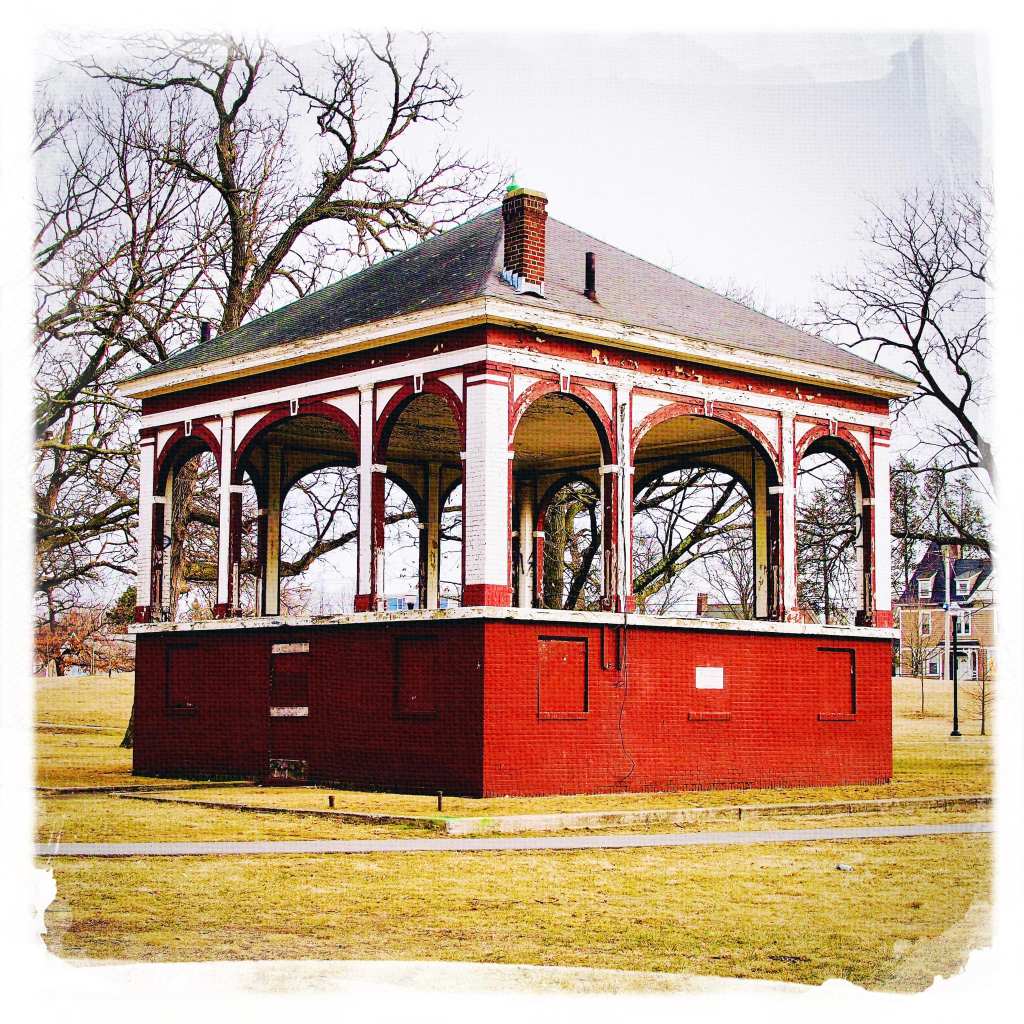
Bandstand, South Lawrence Common

OLYMPUS DIGITAL PEN EP-3
edited with iPhone Hipstamatic app.

I passed through my hometown of Lawrence, Massachusetts this past Sunday afternoon, returning home to Connecticut after a weekend visit with family and friends at Hampton Beach.

I strolled through the O’Connell South Common which, located two blocks down the street from the Market Street three-decker I grew up in, held many childhood memories such as feeding the squirrels with my grandfather, smoking Lark cigarettes filched from my grandmother’s pack with my friend Georgie under the slide, and sledding down the hill on chilly winter days with my sister and dad. So many memories.

I remember on a long ago Saturday afternoon, using the bathroom under the bandstand where I encountered a custodian watching wrestling (or perhaps it was candlepin bowling?) on a B&W TV in his small office in the Men’s Room. He seemed quite content passing the time in his subterranean porcelain fiefdom.

Can you ever go home again? I think if we’ve held on tight to the small and seemingly insignificant memories, perhaps we never left?

©2023 JMSurprenant

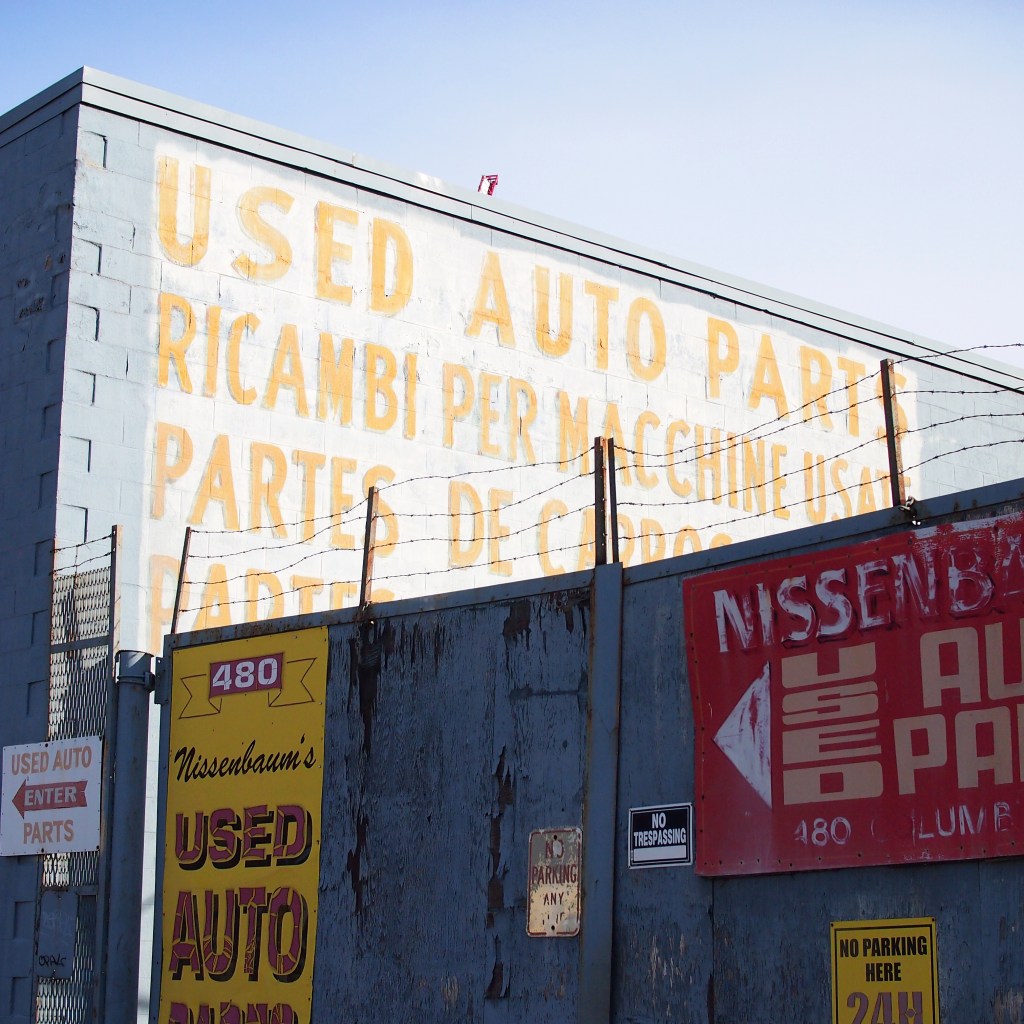
Nissenbaum’s Auto Parts

The Somerville, Massachusetts institution fades away.

According to the company website, Nissenbaum Auto Parts was founded in 1910, by Jacob Nissenbaum, a Jewish immigrant who fled the repressions of czarist Russia, drove a horse and buggy as he collected rags and paper in Somerville and Cambridge.

Over the decades, future generations of Nissenbaums joined the business, in 1929, Joseph, Jacob’s son replaced the horse and carts with trucks and grew the business by purchasing scrap cars.

In 1937, Jacob retired, and Joseph passed away, leaving his son Max to take over as owner and manager who expanded the property and by the mid 50s, Nissenbaum’s started selling auto and truck parts, allowing customers to remove their own parts from the scrapped cars. The first state approved auto body incinerator was erected in 1964 and used until 1967, when vehicles were brought to the shredder.

The fourth generation recyclers, Joseph and Allen, joined the business in the mid 1960s and since that time, Nissembaum’s has dealt primarily in older automobile salvage. Today Neil Nissenbaum marks the fifth generation of family ownership, working alongside his father Joseph, who was 83-years-old in 2022 and his 78-year-old uncle, Allen

The property is now scheduled to be part of the Boynton Yards project, which opened a nine-story building nearby in May 2022, the first of four buildings planned for the life sciences.

According to the Boston Globe, the family listed the property for sale in December 2020, after discussions and years of watching how the neighborhood might change. The time felt right, the Nissenbaums reported.

Another factor, they said, is that demand for car parts has fallen off, particularly in a longtime blue-collar city that has seen more and more gentrification.

Not many years ago, Allen said, “everyone in Somerville had a used car. Who lives here now? People who ride a bicycle and drink latte. None of that group needs us.”

The Nissenbaums know their family history well, and they relate it with pride. They’re also realists, and they figure that the business will fade from most people’s memories after the new Somerville rises there.

“The name has been out front for 112 years. But when people drive down the street in five years, they won’t know we were here,” Allen said.

https://www.bostonglobe.com/2022/06/02/metro/junkyard-turns-gold-somerville-development-boom/

I shot these photographs on a Sunday morning in February 2023 with fellow photographers, Dave Brigham and Mike Zeis. Dave, Mike and I are holding tight to the remnants of the 20th century world we grew up in. We share an enthusiasm for fading architecture of the 20th century and a love for hand-painted signage and urban blight and our visit to Nissenbaum’s did not disappoint.

The above photographs were made with my Olympus PEN EP-2 digital camera. Please feel free to leave your comments or share your memories of a fading Somerville as gentrification continues to re-invent the city.

Thank you for visiting.

Bayou Jumper in a Cigar Box

I was thrilled to see that the good folks at the Four State QRP Group released the 4th revision of their popular Bayou Jumper 40M CW Transceiver designed by Jim Giammanco N51B and David Cripe NM0S last year.

The Bayou Jumper, first released in 2017, is a 40M QRP transceiver that is an homage to the classic Paraset, the legendary transmitter/receiver supplied to the resistance groups in France, Belgium and the Netherlands during World War II.

Whaddon Mk VII – Paraset Clandestine Transceiver c. 1942

The Bayou Jumper, an updated solid state CW only radio kit is intended to be fitted into a hinged wooden suitcase style box available from Hobby Lobby or any other similarly sized box.

Given my recent obsession with building QRP radios and accessories into empty cigar boxes, I felt the Bayou Jumper would make an excellent candidate for cigar box treatment. I found a gorgeous Perdomo 20th Anniversary cigar box in my stash that was approximately the right size, featured gorgeous red and gold artwork on a black background and was constructed of heavier wood than many of the other cigar boxes in my collection.

The Bayou Jumper front panel was a perfect flush fit left to right in the Perdomo box, and only fell 1/2″ short front to back. I modified the box by gluing a 1/2″ square dowel along the top hinged edge to fill the empty space.

Other mods I made to the cigar box included:

  • Adding weights to the bottom of the box to prevent the radio from tipping over backward when the lid was up and to provide a little more heft,
    • Adding a pair of latches to be able to secure the lid closed, and,
      • Reinforcing the original pressed in hinges with three supplemental screw-in hinges.

Building the Kit

I chose the Bayou Jumper to be my 2022 Christmas project. Professionally I have worked in an administrative role in higher ed for the past two decades and one of the biggest perks of working at most leading universities is they completely shut down for an extended winter recess. Building an electronic kit during my winter recess takes me back to my teenage years when I’d spend my holiday break from school constructing the electronic kits I received as Christmas gifts.

Like every NM05 designed 4SQRP kit I have previously built (the Murania One Transistors Boy’s Radio, the 4S-QRP Antenna Tuner, and the Ozark Patrol Regen Shortwave Receiver), assembly was a relaxing no-stress experience. Once again, I was very pleased with the high quality of the double sided etched-through printed circuit board, the quality of the electronic components and hardware, and the in-depth and easy-to-understand instructions and documentation.

I encountered only two minor issues in building the Bayou Jumper Revision D that were hardly a problem, barely an inconvenience.

The first was a missing resistor, R15, a 1/4 watt 100K ohm resistor. I have never experienced a missing part when building a 4SQRP kit and it’s probably just as likely I dropped or lost the resistor than it was wasn’t shipped in the kit. Regardless, I had the correct value resistor on hand in my home stock supply.

The second matter involved the jumper wires provided to supply current to the multi-color LED on the front panel from the main PCB. The instructions stated the kit included a 12″ jumper wire with header pins included in the kit that needed to be cut in half to make two jumpers. However, the jumper wire included in my kit was only 5.5″ long and once cut it in half as the instructions directed, one of the resulting leads was too short to mate to the header pin on the PCB.

As with the missing resistor, I had plenty of jumper wires that I use for breadboard prototyping on hand and was able to create the necessary jumper wires with sufficient slack to reach the contact points.

All in all, the kit went together in just 3 days’ time as I prefer to work slowly and methodically whenever I build a kit. (Whenever I rush through a project I typically find that any time I saved working quickly would be lost in extensive time consuming trouble-shooting that would be needed!)

The topside of my populated PCB. Assembling the kit was straightforward and fun.

Winding the Transformer

The Bayou Jumper features three inductors etched into the PCB but still requires the winding of a single transformer on a T 6-7 toroid core. I have never found winding coils to be difficult or stressful, and in fact, I generally enjoy it especially when the kitter provides excellent directions and illustrations, which 4SQRP did.

The transformer required 3 windings, one of 19 turns, one of 4, and the last of 2. The completed transformer can be soldered to either the top or bottom side of the PCB, based on the builder’s preference and tje screen printing on the circuit board makes installing the completed transformer essentially foolproof. I chose to mount the transformer to the bottom side of the board to make it easily accessible for adjusting the spacing of the winding to adjust the receiver’s tuning range.

The completed transformer mounted to the bottom side of the PCB.

Faux Crystals?

The Bayou Jumper’s crystal socket accepts the classic FT-243 crystal form, a popular Cold War era crystal size that today is no longer manufactured and increasingly rare.

The Bayou Jumper comes supplied with a pair of HC-49 crystals for 7.030 and 7.122 MHz, and two crystal adapter boards to fit the HC-49 crystals into the FT-243 sockets.

Vintage FT-243 cases are large enough to accommodate modern small HC-49 crystals and with its 3 screws, the FT-243 can be easily opened and re-sealed, making it possible to re-stuff FT-243 cases for modern QRP use.

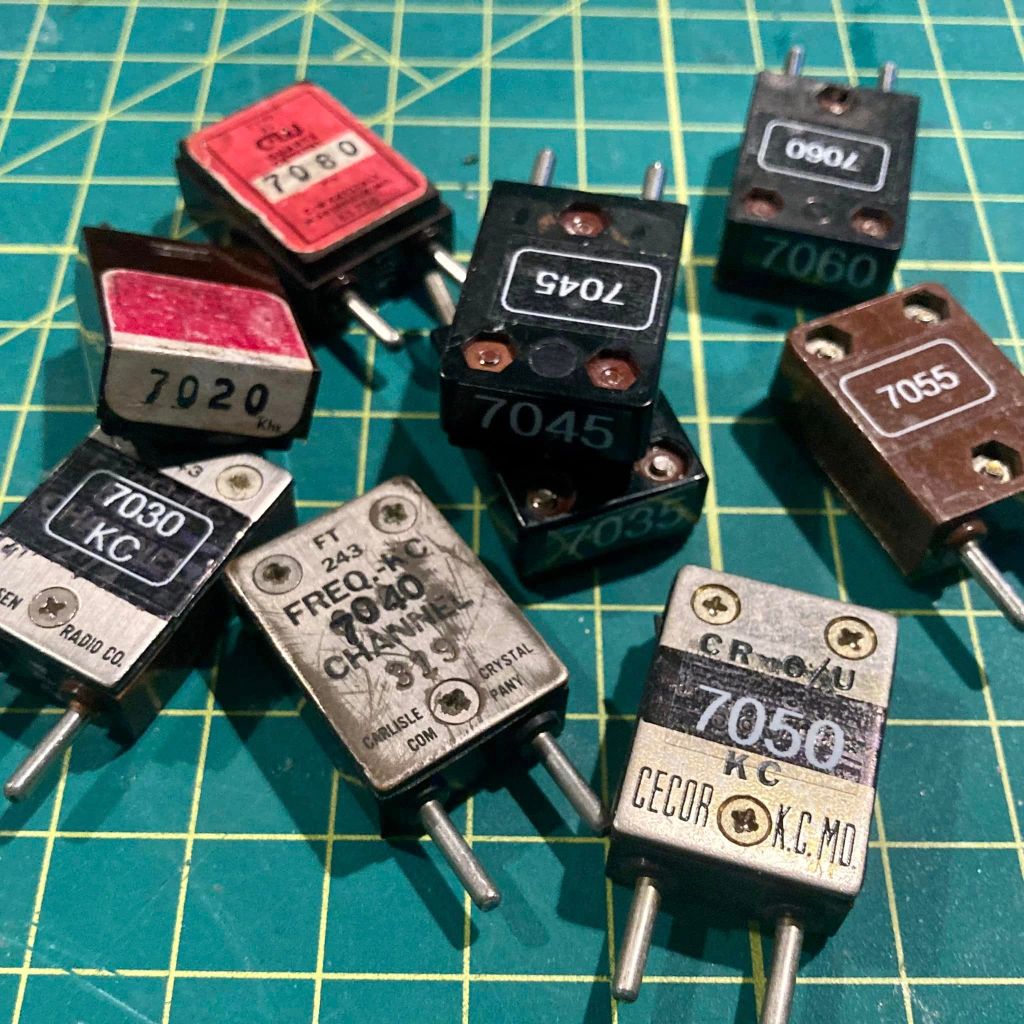
Using several of the FT-243 crystals for non-amateur frequencies that I picked up at ham-fests, I have modified 9 crystals for use on the 40 meter CW sub band, all ready to go in my Bayou Jumper.

Receiver Alignment and Final Assembly

Again, the excellent directions made aligning the receiver a snap. Instructions are provided for a variety of alignment methods using an oscilloscope, a frequency generator or a calibrated receiver capable of CW reception. Having all three available to me, I tried all three methods and was pleased when all three were in sync.

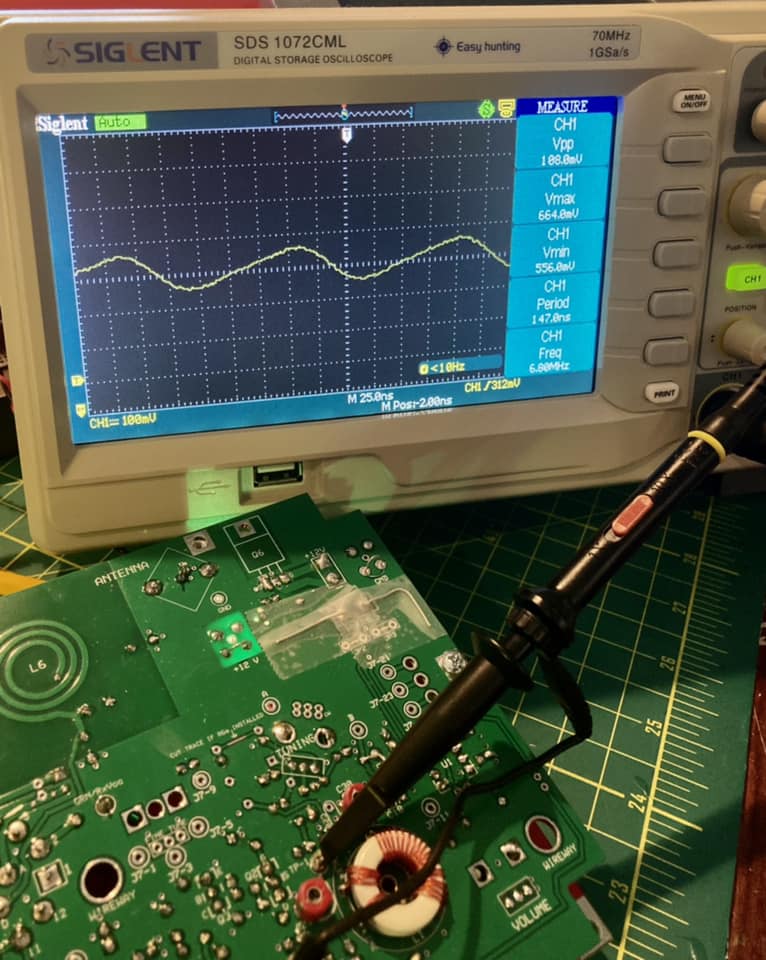
I started taking a frequency reading with the tuning dial set to the low end of the scale with my O-scope and read 6.897 MHz.

Next I tried sweeping the dial of my frequency counter to spot the point where oscillation could be heard in the earphones. My frequency counter has an analogue scale and was able to read the resonant frequency at about 6.9 MHz.

Finally I set my portable C. Crane Skywave SSB travel radio for LSB and tuned to the 6.900 and tuning up and down was able to hear the receiver’s oscillator at about 6.895 MHz.

Following the directions to adjust the tuning range by spacing the L1 windings on the transformer closer together or further apart and then adjusting the C30 trimmer, I was able to achieve a final tuning range of 7.000 – 7.167 MHz which should be more than adequate for the CW sub-band I would use.

Finally, I followed the directions to verify regeneration and was happy to find that my receiver needed no further adjustment. Satisfied with my work, I mounted the radio in the cigar box and am looking forward to putting my Bayou Jumper on the air.


Stay tuned for Part II where I will report on my experience operating the Bayou Jumper on the air and any future adjustments or modifications.

HecKits QRP mW Meter

My second HecKits build was a great experience – just like my first!

I have become a big fan of the HecKits QRP kit line. A few months back, while looking for a modern dip meter kit, I discovered HecKits and ordered their FET Dip Meter. My experience was with that first kit was great in every way. I was impressed by the high quality of the materials and components, the easy to follow directions, the excellent documentation, and the outstanding customer support courtesy of Darrel Heckendorf, the man behind HecKits.

My wife gifted me the HecKits QRP mW meter as a birthday gift this year and I had the time this past weekend to tackle the project.

Once again, HecKits gets the highest marks for its documentation. The construction manual, sent by PDF by Darrel, was comprehensive, easy to follow and full of detailed illustrations. And again, I was very impressed with the high quality of the parts and materials included in the kit. Everything needed to complete the project is included and the fit and finish is unparalleled.

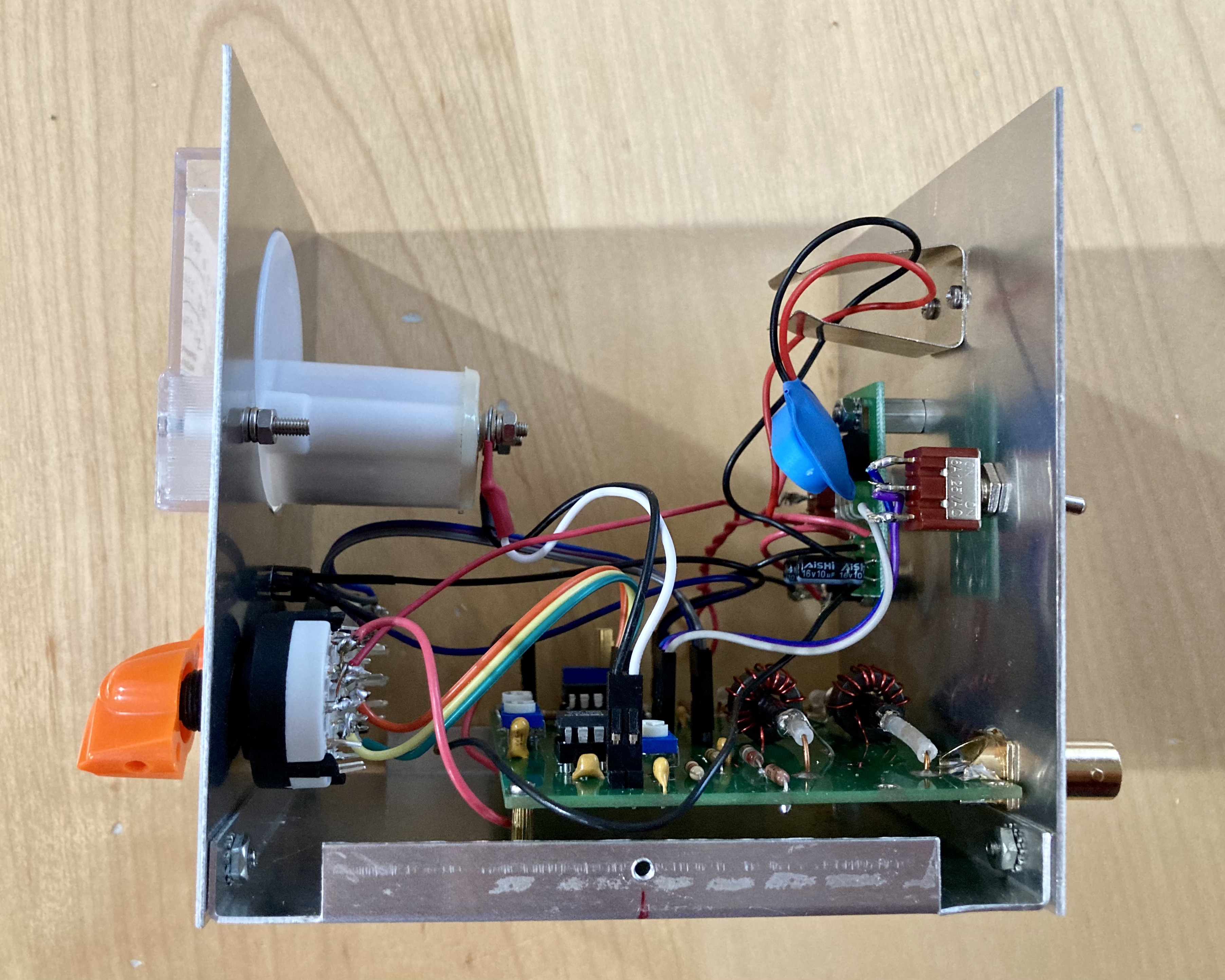
I was very impressed with the screen printed plated through PCB and included in the kit is a handsome precision drilled metal enclosure giving the finished project a professional appearance. While building the meter, I frequently paused to appreciate the high attention to detail that was put into the kit. For example, the manner in which the BNC connectors mate with the PCB and back panel of the enclosure shows precision engineering that went into developing the kit.

The completed circuit board. It came together in just a couple hours’ time and I was very impressed with the high quality and attention to detail that went into engineering this kit.

I was able to assemble the kit from start to finish in about three hours’ time – and I do work slowly and try to be meticulous in my work. The meter requires the builder to wind two toroids – a task that I never mind – and again the detailed directions would make it nearly impossible for even a novice builder to fail.

I did run into a small glitch, however. When I finished assembling the kit and began the calibration process, I was disappointed to find that the meter was not responding when I first applied power.

I removed the PCB from the chassis to begin troubleshooting. I had assumed perhaps I messed up the polarity on a diode or tantalum capacitor, but quickly discovered the problem was the ham-fisted way I inserted one of the ICs into the DIP socket, smooshing one side of the pins against the socket. I carefully straightened the pins, reinserted the chip and VOILA! All was well.

HecKits gets big props for the calibration process too. All that is required is a precision voltmeter and an RF tuning tool or eyeglass screwdriver. The kit has a multi-turn pot on the PCB that is used to adjust input voltage for calibration purposes. Once the builder sets the input voltage to the specification, the meter is adjusted for full deflection at 10 watts, 1 watt and 100 milliwatts by adjusting the corresponding trimmer pot on the PCB. What a snap!

My finished meter – I swapped out the original black knobs for the mini orange chicken-heads….
I do stuff like that – kind of makes my gear unique.

I’m eager to add my new wattmeter to my QRP station and I look forward to my next HecKits build. You can get your own HecKits QRP meter or one of their other fine kits on their website – https://heckits.com/shop-heckits. I highly recommend their products for anyone who enjoys building their own QRP gear.

Have you built a HecKits kit? What was your experience? Please leave a comment or drop me a line at james@ab1dq.com.

Thanks for taking the time to visit my blog!
72 de AB1DQ / James