

This August my wife and I were invited to spend a weekend with friends at their beach house on Lac La Belle in Waukesha County, WI. The lake was just a couple of hours north of Chicago, so the plan was to fly into O’Hare and rent a car for the drive up.
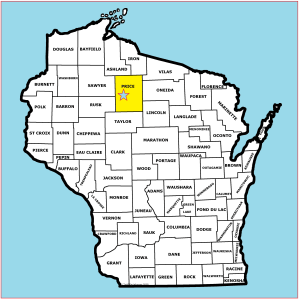
My father was born and raised on a small family dairy farm in Price County in the Northwoods of Wisconsin and to this day I have many cousins living in the vicinity that I only get to see every few years, so we decided to extend the weekend trip into a week and drive north to see kin and then head west to Minneapolis for the flight home. The only thing that could make my Wisconsin vacation to see family and friends better of course, would be if I brought radios along.
Learning from the past
Two years ago, I made my first long distance trip with a portable HF station when I took my Xiegu G90 and an end fed half wave antenna on a flight to California to activate Yosemite National Park. For that trip, I placed the radio along with a LiFePO battery in a Pelican case along with the microphone, a compact Morse key and cables. I carried the Pelican case as my carry-on luggage which worked well aside from the fact it was a bit bulky and left no room for other things I like to have with me on a flight such as my iPad, a book and a camera.
For this year’s trip, I decided to pack the battery and the G90 into a backpack for the flight so I would have room for those other items during the flight. I didn’t want to carry the radio, or the battery unprotected in my backpack and I found a good solution.
Shopping on Amazon, I discovered that bible zipper cases came in a variety of different sizes and an 11″ x 8″ size case is a perfect size to hold the G90 and microphone. Here is a link to the case I purchased for my G90. For the battery, I purchased a small zippered cosmetic case that was also a perfect fit. The G90 and battery in their zippered cases fit nicely into my backpack with plenty of room for other carry-on items.
The EFHW antenna and the necessary 9:1 unun I brought to California also fit nicely in the Pelican case. However, I found deploying the wire antenna in the field to be less than ideal, needing not only a tree branch overhead to suspend one end of the antenna wire but also a means of launching the wire into the branches. I had brought along an arborist throw line with weight which I packed into my checked luggage. Yosemite had no shortage of trees, but at the time I was suffering from bursitis in my right shoulder, and I was only able to get the antenna up about 15 feet. Given the fact I was operating from a canyon rim, it all worked out well and I had a successful activation.
For this year’s Wisconsin trip, I gave the EFHW a pass and instead packed my JPC12 portable vertical trap antenna and 50′ of RG8 coax into my checked bag. The JPC12 is a Chinese made clone of the BuddiStick but with a couple of features I prefer. Instead of needing to be clamped to a railing or mounted to a separate tripod, the JPC12 has a ground spike that is driven directly into the ground making set up possible anywhere the ground is penetrable.
The JPC12 also comes with a simple but effective ground plane system of wires which is easier to deploy, and I assume provides a better counterpoise to the antenna than the single wire that comes with the Buddistick. Both the Buddistick and the JPC12 breakdown and stow nicely into a nearly identical zippered bag.

Into the Fatherland
Our flight to Chicago was uneventful. As expected, the radio and battery in my backpack resulted in a hand inspection of the bag by TSA. The agent swabbed the battery and had no issues with the G90 and the extra time at security was minimal. Whenever I fly with radio gear in my carry-on bag, I do pack an official copy of my amateur radio license and some POTA brochures, in case I needed to explain the purpose of my gear. To date, I’ve not needed to rely on these props.

Arriving at the lake house, we were greeted by our friends and had a marvelous three days on the water swimming and boating and catching up. Our host and his adult daughter were not aware of ham radio and were intrigued by my portable station and plans to activate parks and asked if I could demonstrate the radio for them at the beach house. This gave me an opportunity to perform a test setup and operation of my gear before deploying to a park, which I was eager to do as I had not had the chance to try out the radio after updating the firmware to ver. 1.8 prior to leaving on the trip.
I was surprised and pleased with the G90s’ quality of reception on 20 and 40 meters and made several contacts on both bands using both SSB and CW prior to heading to a park.
Park 1: US-9846 Rome Pond State Wildlife Area
On Sunday August 25, I loaded up the rental car and drove about 20 minutes from Lake La Belle to the Rome Pond State Wildlife Area. It was an ideal location for a POTA activation. Next to the parking area was a covered picnic area with about a dozen tables and a nice adjoining field with barbecue grills which provided a great location to deploy the JPC12 antenna.
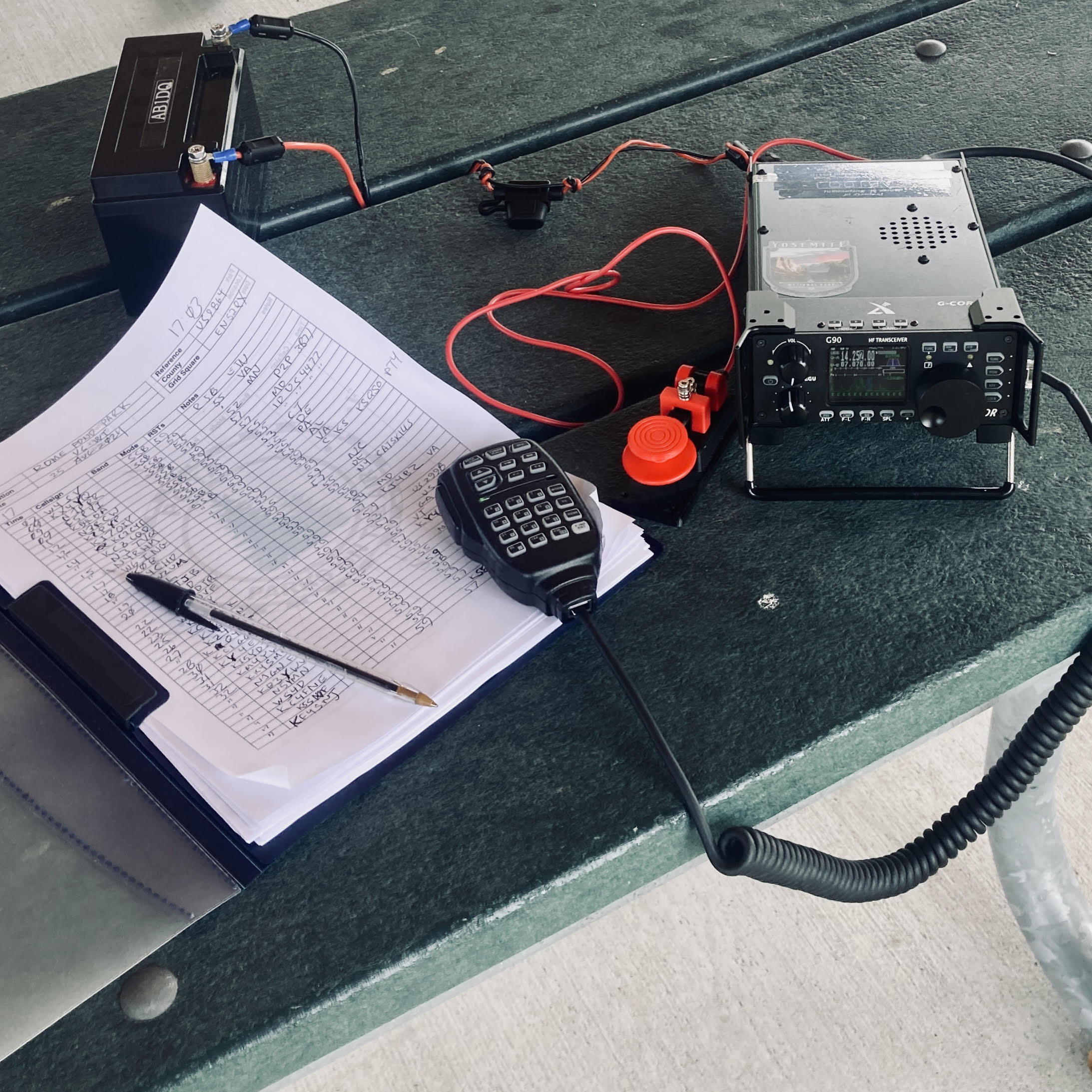

I truly love the G90. Not only is it compact with a great SDR front end with solid filtering, the built in auto-tuner is quick and precise and 20 watts output is more than sufficient to ‘work the world’ with good conditions.
Set up took about 10 minutes from start to finish and I was quickly on the air. I made 39 QSOs on 14.252 MHz in about a half hours’ time working stations all across the US plus one contact with a station in France.
The only downside of my activation of US-9846 occurred when I was taking down the JPC12. Being completely careless, I managed to bend a crease in one of the segments of the telescoping whip, nearly breaking it in half. Using a piece of aluminum foil, I snugly wrapped above and below the bend and then wrapped the section tightly with electrical tape. I left the broken segments extended for the rest of the trip and ordered replacement whips from AliExpress that night.
Park 2: US-4330 Spring Creek Wildlife Management Area
After a glorious weekend on the lake, we spent most of Monday making the four plus hour trek into the Northwoods to Price County where my dad was born and raised and where most of my cousins still reside.
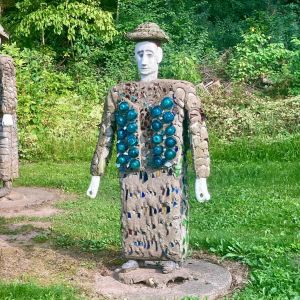
Wisconsin Concrete Park
The town of Phillips, Wisconsin, the seat of Price County has a population of about 1,500 and is a great destination for fishing and hunting. Within Phillips is the Wisconsin Concrete Park, a unique roadside attraction featuring over 200 Americana folk art sculptures built with concrete and decorated with glass bottles and other found objects. Fred Smith, who ran the Rock Garden Tavern on the property, began building the sculptures in 1948 after retiring from his career as a lumberjack. Smith, who lacked any formal artistic education, initially built two-dimensional bas relief plaques and eventually transitioned to constructing his larger sculpture.
On Tuesday, August 27, I headed out for my second POTA activation of the trip and decided on US-4330 Spring Creek Wildlife Mangement Area based on its proximity to the Timber Inn in Phillips where we were staying. The park was about a dozen miles southwest in the township of Catawba.
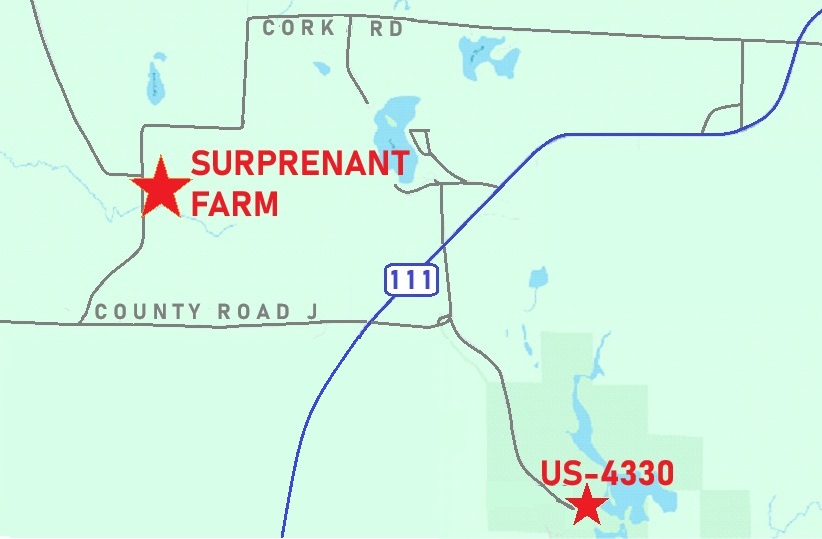
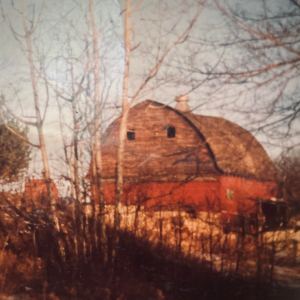
As I neared the turn off for the park, I spotted a sign for Cork Road and suddenly realized that I was in very close proximity to the location of the family dairy farm where my dad was born and raised. My grandfather’s farm was on Cork Road, a long dirt road cutting through the woods and in past visits, I had the opportunity to see the family farmhouse and barn, which my dad recalled helping build when he was a young boy, and hunt on the land with my dad, uncles and cousins. The farm was sold out of our family decades ago and sadly neither the barn nor the farmhouse still stands.
My activation at Spring Creek was successful, although a bit more challenging than the previous activation at Rome Pond. This time the weather was not-so-pleasant as T-storms were passing through the area. Also, there were no picnic areas at Spring Creek so given the inclement weather and the swarms of mosquitos, I deployed the JPC12 antenna behind the rental car in a parking area within the park and operated from the driver’s seat. Another successful activation, I made 30 contacts on 14.252 MHz working stations all across the U.S.
My trip to Wisconsin this year was a great time with family and friends, and it provided me with a great opportunity to activate a pair of Wisconsin parks in the POTA program. If you were fortunate enough to work me, keep your eye on your mailbox. Whenever I travel to activate a park I like to send out a commemorative QSL card as a way to memorialize the trip without seeking or expecting reciprocation.
73 from the land of the cheese curd and the brat’ !

 AB1DQ
AB1DQ 
I’m glad your POTAs went so well. Nice description of the logistics involved.73, KC1TSM
LikeLike
Thanks KC1STM for the kind words and all your support for me and my radio obsessions!
xoxo de AB1DQ, your OM, James 🙂
LikeLike
James, thanks so much for sharing your adventure! I’ve been able to shave a lot off of my learning curve for portable operating by following your lead. Next up I’ll have to start learning about POTA.
73,
Jack WA1K
LikeLike
Thanks Jack, I appreciate the feedback and am glad to her you’re doing more – keep me in the loop and good luck!
73/ James
LikeLike